The snow and ice crunched under Brynwolfn’s feet as she made her way over the mountain. The sun was only hours away from setting, and as she looked at the horizon she knew that if she turned around within the next few minutes, she would likely make it back to the nearest entrance tunnel before dark. If she kept going, she would be forced to either make her way back across icy cliffs and slopes in total darkness, or try to find enough shelter from the wind to survive camping for a night on the mountain’s face as the temperature plummeted.
But Waybreaker was only days away from completion, and she was headed to the last spot where her clues could possibly be pointing, so she either needed to find what she was looking for on this trip, or admit defeat and go back empty handed with no means of completing her plans to break Keledrain’s grip on her people. She shifted the pack on her shoulder blades and continued forward.
She knew the destination she was looking for couldn’t be too much farther now because of the supply requisite forms from eighty years before that. It may have been a different general and a different Faraluken in those days, but some things never changed, and she knew exactly how to calculate the quantities on a supply requisite form based on the number of warriors in the unit, and how far they intended to travel for their mission, training or not. Thanks to the number of requests for helmets on the requisite form, she had a reliable headcount, so she had no trouble figuring out the intended distance from there. With every step she took, she was certain she was near where the Lost Warriors had been sent.
Of course finding the clues that had brought her this far had been both difficult and risky. She knew from Brekoth’s reaction during their last conversation that it would be unwise to be too obvious in her search for information about the Lost Warriors. The general sentiment among the Hulfraust was that Keledrain’s network of spies and secret police among the dwarves had fallen apart more than a generation ago, either from turning on each other or simply from Keledrain’s neglect. After all, she seemed to believe that simply the memory of the fear she caused for decades would still be enough to keep her subjects in line indefinitely. Though the possibility of this crumbling of power seemed plausible to Brynwolfn, there was far too much at stake for her to go carelessly testing that theory. So she had been careful.
Rather than asking around about the Lost Warriors or trying to find records kept by the army’s historical documents, she began searching for periods of missing information in records kept by the various guilds. To her delight, she found that Brekoth’s wisdom had held true. Sometimes silence did indeed speak louder than anything else. Brynwolfn had found a two month period from eighty years before where all of the records for every guild had been pressed smooth and blank. Two months had simply been erased from Hulfraust history. But Brynwolfn didn’t need those two months exactly if she could look at what happened before and after.
In the end, it was the Tanners Guild that provided Brynwolfn with her next breakthrough. Though one of the less prominent guilds, their records were exactly what Brynwolfn needed. There was a steady demand for leather goods among the Hulfraust, so the supply from one year to the next tended to be consistent as well. On top of that, they wasted very little, and they didn’t frequently use resources for experimentation and development like the blacksmiths and alchemists did, so their output almost always matched their input. So when Brynwolfn spotted a large discrepancy in the Tanners Guild’s annual inventory report from the year before the event and the annual report from the following year, she felt a thrill of excitement.
Six tanned and treated canvases of mammoth goat hide had been written off as a loss, which made no sense under normal circumstances. Theft was incredibly uncommon among the Hulfraust nation, and mammoth goat hide wasn’t particularly valuable without being fashioned into something first. One canvas alone could be damaged by a careless apprentice, but even then it was unlikely that the entire canvas would be written off as a total loss. A single canvas sheet of mammoth goat hide was typically between ten to twelve feet long and between eight to ten feet wide, so even if half the canvas was ruined, the rest could still be cut into smaller pieces and used elsewhere for the guild to trade and get some value out of. Writing off even one mammoth goat hide seemed out of character for the Tanners Guild, and six seemed absurd.
Fortunately, Brynwolfn’s decades of experience moving through the ranks of the Hulfraust army helped her piece together that mystery as well. She had served as a quartermaster for a number of years, and she knew that although mammoth goat hide could be used for making several things, there was really only one common use for an entire sheet of mammoth goat hide canvas recorded as a single inventory item, and that was making tents big enough for the army to use in their outdoor training exercises. With each tent built to shelter four dwarves, and six canvases written off, Brynwolfn finally had an idea of how many warriors she was looking for. If her hunch was right, at some point during those two months of erased history, twenty-four warriors set out with six borrowed tents, but they never returned.
The fact that the tents must have been borrowed instead of bartered was also telling. The Hulfraust army was tight and efficient with its funds, and it always had plenty available for its needs. That meant that if someone was borrowing expensive equipment like new tents, then they must have been trying to conduct a military operation off the books, without the need to make purchases that would arouse suspicion. Calling in favors, subverting the official chain of command, and then failing to follow through on compensation was the kind of careless, selfish behavior that lived up to the reputation of Keledrain and her spy network.
Brynwolfn was abruptly pulled out of her own thoughts and back into the present as she slipped on an unusually slick piece of ice, landed hard on her side, and began to slide down a treacherously steep slope. She acted with a speed that would have left an onlooker wondering if she had choreographed the slip intentionally into a kind of brutal dance she had learned by heart. The reality actually wasn’t far off from that. Dealing with slips and tumbling down slopes was one of the most common exercise drills that Brynwolfn practiced along with her Faraluken. “Finding yourself on the ground is inevitable,” she would always tell them, “but finding yourself helpless and vulnerable on the ground is a lack of preparation.”
Brynwolfn fluidly unclipped her malvapn from her belt and slammed the Thump end down hard on the ice in front of her, creating thick cracks in the ice and propelling her up from the ground and into a crouching position. She then spun around and brought down the Click axe head of the malvapn into the cracked spot of ice, which she had nearly slid away from already. It drove deep into the ice, and Brynwolfn’s firm grip on the handle brought her to an immediate stop. The strain left an ache in her right shoulder, but she had saved herself from the sheer rocky dropoff only a few yards further down the slope.
She retrieved a metal spike from the side of her pack and used it and her malvapn to carefully make her way back to the top of the slope. Once she was back on stable footing, she stood and brushed the snow, ice, and dirt off her clothes and armor. She didn’t waste time staring down at the ravine or congratulating herself. After all, this was what she trained for. She continued forward, stepping more carefully as the daylight began to dim.
Brynwolf’s thoughts went back to one of her earliest training exercises during her first year in the Hulfraust army. Her instructor was a gray haired member of the Faraluken named Vistadth, and he pushed Brynwolfn further than she thought possible. One day she had lashed out from exhaustion and demanded to know if he had been trained so hard when he had first started.
She remembered how Vistadth had grown still and distant at the question, until he finally replied, “Not all of us were lucky enough to have a whole Faraluken to train them. You don’t know how lucky you are that you don’t have to figure this all out on your own.” After that, he had doubled down on the intensity of Brynwolfn’s training, and she hadn’t questioned him again.
Brynwolfn never did understand what he had meant by his comment, but now decades later, it started to add up. She realized that Vistadth had probably joined the Hulfraust army right around the time that something had happened to the Lost Warriors, and if the Lost Warriors had actually been the Faraluken of that time, their disappearance would have had far more devastating effects than Brynwolfn first suspected. It would have left the entire nation feeling vulnerable and afraid, and it would have robbed the rest of the Hulfraust warriors of their trainers, their role models, their heroes.
The thought that Keledrain had managed to not only survive such a scandal, but to entirely cover it up with only the commanding weapon ritual as a consequence sent a shiver through Brynwolfn. Her grip on the Hulfraust in those days, and the reach of her secret police, must have been tighter and farther reaching than Brynwolfn had even considered. She realized there may be more dangerous about this mission of hers than just the cold exposure of the quickly approaching night. For the first time, she questioned whether she should simply head back. And then she spotted the ruins.
Though Brynwolfn had been unsure of what to expect, she had never imagined she would find what appeared to once be a whole town of stone homes and buildings right there on her mountain. There was no record of something like this on any of the Hulfraust maps or charts. At least, there was no record of it in her day.
As she looked across the scene of collapsed roofs, cracked walls, and fallen doors, everything looked utterly desolate and dead. Except for one small yellow and orange flag that flapped in the wind on the end of a pole. Surely it was a sign that someone must have been here within the last two or three days at the most.
Brynwolfn tore her eyes away from the flag as she heard the crunching of ice nearby. She turned, and then she and a tall, dark skinned stranger spotted each other at the same time. She made no sudden moves, but kept her right hand close to the belt clip where her malatol hung ready for her to use. The stranger held a small shovel in his hand, and while he seemed surprised to see Brynwolfn, he didn’t seem alarmed or show any sign of a threat. If anything he looked somewhat… embarrassed?
“Oh, ah, hello,” he said. “Are you an old friend of Mendoji’s too?”
***
Tarun couldn’t help but feel rather awkward as he escorted the woman who had introduced herself as Brynwolfn towards the inner sanctum to meet Mendoji. Every time they exchanged words with each other, he was keenly aware of the shovel in his hand and silently hoped that she would continue to not ask about it.
He and Mendoji had been there at the monastery for three days and nights before Brynwolfn had arrived, and after all the funeral rights had been completed during the morning of the second day, the stay had actually been quite peaceful and pleasant. They had patched enough of the holes in the walls of the inner sanctum that it stayed relatively warm at night, and they had enough food and supplies to last them at least another four or five days if they felt the need to stay that long.
Mendoji had spent the majority of his time trying to access rooms and buildings that he hoped would contain records that might provide insights about Shon’s staff. Tarun helped however he could, and when there were no doors to pry open, walls to climb, or roofs to lower himself through, Tarun found that he quite enjoyed the quiet solitude there on the mountain. He could see why the monks had chosen to build their monastery here.
There was one significant point of inconvenience though. Between the spiritual nature of the place, and the knowledge of how many had died there, Tarun knew the entire monastery grounds were hallowed and special. This meant that any time he felt the need to relieve himself, he wasn’t comfortable doing so until he felt he was sufficiently far away from the borders of the monastery. And he had just finished burying the evidence of his presence with the shovel in his hands before heading back to the monastery and encountering Brynwolfn. He really hoped she wasn’t aware of what the shovel was for. Or if she did, he hoped she would continue to feign ignorance.
“We’re nearly there,” Tarun said for the third time. “I imagine Mendoji will be glad to meet you. Did you say this was your first time traveling to this monastery?”
“It is,” Brynwolfn replied. Tarun noticed her accent and figured she wasn’t speaking the language she was most familiar with. Her words were fluid and confident, but every now and then she would pause and tap rhythmically on her weapon, as if it helped her to search for the right word to say. “Though I believe that some others of my people may have traveled this way many many years ago.”
“I wonder if they might have met anyone that Mendoji knew?” Tarun said brightly. He then added in a more somber tone, “I’m afraid he’s the only monk left now.”
“Yes, that would seem to be the case,” she said, nodding. “I cannot imagine his home could have fallen into such a state if there were more hands to help with the cleaning.”
“Oh you can’t blame him for that,” said Tarun. “He actually hasn’t been here for a long time. Would you believe this has been his first time back in more than eighty years?”
Brynwolfn looked at him with an odd expression that he couldn’t quite read. “You don’t say? That is quite interesting. I look forward to asking him more about it.”
“I might actually suggest saving questions like that for the morning,” said Tarun. “It’s a sensitive topic for him with many unpleasant memories. It might not be the best conversation immediately before sleep.”
“Do you mean to say that you are inviting me to sleep here for the night?” Brynwolfn asked.
“Of course,” Tarun replied. “There is no other suitable shelter from the cold for several miles, and we wouldn’t dream of turning you away.”
“That is most hospitable of you,” said Brynwolfn. “I gratefully accept.”
Just then, they arrived at the large door to the inner sanctum. Tarun could tell that Mendoji already had a fire going in the hearth in the middle of the building, because he could see the shafts of light escaping through the remaining cracks in the wall piercing out through the gloom in the growing darkness outside.
“Would you be willing to wait out here just a moment?” Tarun asked. “We obviously weren’t expecting any company, and I just want to make sure he isn’t in the middle of a meditation or some other ritual. I’ll be right back.”
***
Mendoji had been surprised, yet strangely delighted when Tarun told him about an unexpected visitor he had met at the borders of the monastery. He didn’t realize there were any settlements close enough for anyone to journey to the monastery in a single day. He wondered if they might have a village nearby where he could try some of the regional foods that he had remembered enjoying so much as a boy.
He stood up from the ground as quickly as his old, stiff joints would allow him, straightened his robe the way he had been taught as a young monk, and walked to the door, opening it wide for their visitor.
Mendoji had been thinking of something gracious and welcoming to say, but the moment the door opened, all the words fell from his mind like snow knocked loose from a heavy roof. His heart dropped down to his stomach, and he felt dizzy as the entire room around him seemed to tilt and sway. His breath became short and shallow.
The style of armor, the broad stature, and that damnable weapon on her belt were unmistakable. She was one of them. She belonged to the same group of screaming berzerkers that massacred his monastery.
Brynwolfn character art by Ryan SalwayTarun
Arty By Ryan SalwayMendoji art by Ryan Salway
Waybreaker was underway. Brynwolfn had taken a much more direct role in ordering the commanding weapon for Keledrain than she ever had in years past. Ever since she had accepted her position as the highest ranking general of the Hulfraust army, she had been more than happy to leave the commissioning of the weapon between Keledrain and the leaders of the various artisan guilds. Up until now, Brynwolfn had seen little point in getting involved in a ritual which served the primary purpose of placating the ego of their arrogant “queen,” as well as serving the secondary purpose of giving the Hulfraust artisan guilds something to show off all their latest advancements and techniques on.
Brynwolfn’s responsibility was very simple. Whatever weapon was ultimately decided, it was her job to train her Faraluken to learn to fight with it. The Faraluken Infantry was the most elite unit in the Hulfraust army and it consisted of the most skilled and experienced fighters in the entire nation. As the highest ranking general, Brynwolfn was the only one with the authority to command them.
There was no duty she took more seriously than keeping her Faraluken primed and prepared for any battle they may be required to fight. She trained them in the heat of the forge halls and she trained them at the icy heights near the mountain’s peak. Part of the year she trained them to work as a single fighting unit, and part of the year she assigned them to train and fight alongside units of novice soldiers to set an example and show them the Faraluken standard. They were fast, they were efficient, and most importantly, they could all adapt to whatever challenge Brynwolfn threw at them.
That need for versatility was the first reason Brynwolfn began the annual tradition of training them to use whatever weapon was being designed as that year’s commanding weapon. Keledrain never commissioned the same type of weapon two years in a row, and quite often her demands would vary wildly from one year to the next. This helped ensure her Faraluken never became complacent or bored. Every year was a new opportunity to adapt.
Another reason she trained them this way was simply her disdain for wasting resources. The guilds responsible for creating the commanding weapon made dozens, sometimes hundreds of iterations before they were satisfied with a final result. That meant a surplus of weapons that were often unfamiliar to the majority of the Hulfraust army. Several of them even had enchantments and other modifications already bonded to them. Brynwolfn decided that it would be a waste to simply send such well-crafted weapons back to the smelters.
And so every year, Brynwolfn trained her Faraluken with these early drafts of the commanding weapon as they became available. In all honesty, the challenge and novelty of those training sessions was one of the things she looked forward to most every year. But this year would be different. Her Faraluken would need no special training on the weapon being forged this year, because the weapon being fashioned this year was a malvapn.
Brynwolfn smiled as she thought about her plan, and unconsciously twirled her malatol, the speaking tool that all Hulfraust adults carried with them to converse in their percussive language, and moved it deftly between her fingers. She paused a moment to look at her malatol and admire the simplicity and brilliance of it. More an extension of herself than a simple tool, to Brynwolfn the malatol and malvapn defined the Hulfraust nation more than their physical boundaries or location ever would. She took a moment to strike each part of the malatol against the stone in front of her.
Thump. Tap. Click. Ping.
With the right order, rhythm, spacing, and emphasis, those four percussive consonants could say anything worth saying in the Hulfraust language. Together, those four sounds told every story that ever mattered to Brynwolfn and her people. They were simple, yet contained the complexity of everything in existence.
Thump. That was the blunt end of the malatol. It resembled the head of a hammer, but unlike most hammers its striking surface wasn’t actually flat. Rather, it was comprised of six triangles of equal size that all met together at the center of the surface. The tips of the triangles in the center were slightly more elevated than their edges around the circumference of the striking face, but the slope was so gradual it was easy to mistake for a flat surface without looking close.
On the malvapn, the thumping side delivered crushing blows that could break apart stone and make most metal armor crumple like parchment. There was a reason that Thump was always listed first among the consonants, because in an argument fought with a malvapn instead of a malatol, there was rarely a need for a second syllable after the first Thump.
Tap. That was the surface of the malatol furthest away from the handle. Brynwolfn had sometimes heard others refer to it as the “top” of the malatol, but she thought it was limiting to think of the tool in terms of “top and bottom” or “left and right.” That seemed to imply there was some established “right way” to use the malatol, which she believed was a mistake. The tapping surface was shaped like a single tooth on a saw, and it was placed directly between Thump and Click at the heavy end of the tool.
On the malvapn, the tapping surface was shaped like the tip of a double-edged broadsword, and it provided an upward stabbing and slicing tool that turned the reduced height of the dwarves into an opportunity rather than a disadvantage.
Click. That surface sat opposite to Thump, on the other side of Tap. This surface was wide, flat, and curved. It also provided the most versatility in terms of regional and family accents within the nation.
On the malvapn, Click was a great, curved axe head that was used to cleave and chop anything that couldn’t be smashed or sliced out of the way. The ends of the axe blade did not make contact with the handle, and this allowed it to also be used to hook on to targets that needed to be brought down. And this was done for the final syllable to end things with finality.
Ping. The side furthest away from all the others, on the opposite end of the handle. Its base where it met the handle was round, but it sloped steeply to a point as sharp as a needle. A small spherical weight sat between the base and the handle and served to prevent any accidental slipping of the tool, and to give some extra weight to make sure the higher pitched sound of Ping was not lost among a flurry of other sounds.
On the malvapn, Ping acted as a spike to finish off any foes brought to the ground with Thump, Tap, or Click. It was sharp, heavy, and was tipped like a spear. While the other three parts of the malvapn were responsible for countless injuries inflicted upon their enemies over the centuries, this end delivered only swift and inescapable death.
Ping was a sound of finality and completion both on the battlefield with the malvapn and in the peaceful halls of the Hulfraust with the malatol. Nearly every poem, song, and story composed in the Hulfraust language ended with a Ping to let the audience know when it was done.
Thump, Tap, Click, Ping. Brynwolfn couldn’t shake the uneasy feeling that she was neglecting something important in her plans, but couldn’t figure out what that was. She was still missing something, and she worried it could cause the entire plan to fail. The feeling left her on edge.
Brynwolfn felt the edge of the Click face on her malatol. Then she paused and looked at the tool again. She struck the stone next to her, going through each of the consonants again.
Thump. She had convinced the Council of Balance Sages to go along with her plan and help organize the the several pieces that needed to simultaneously fall into place. It was only the first blow to Keledrain’s power over the Hulfraust, but an absolutely critical one.
Tap. Brynwolfn had initiated the construction of Waybreaker, and had personally delivered her instructions to the blacksmiths, mages, and other artisans involved in its creation to ensure it would be made exactly to her specifications. Keledrain had no reason to believe Brynwolfn would ever take such a personal interest in one of her commanding weapons, and Brynwolfn had taken full advantage of the lack of oversight into those details.
Click. Preparations were underway to make it possible for the entire nation to evacuate their mountain home in a matter of hours, rather than days and weeks. Land around the base of the mountain was being cleared, and portable structures were being constructed that could be set up for sleeping, cooking, and other living essentials. The balance sages were even building pieces that could be assembled into a small, outdoor Temple of Balance, complete with inner and outer halls. Food, clothing, bedding, weapons, medical supplies, and other goods were being stockpiled and organized with the kind of efficiency only possible among the Hulfraust. Life outside their mountain would be strange and scary for many, and very different from the warm, dry, comfortable life they enjoyed within. But Brynwolfn knew that severing their desperate dependence to the mountain would be crucial to severing Keledrain’s power over her people.
Ping.
Ping.
Ping.
Brynwolfn looked down at her malatol. Spinning the handle between her fingers, the faces of Thump, Tap, and Click created a blur of motion. But little Ping at the far end didn’t seem to move at all. Brynwolfn almost felt as if the tip of the tool was staring at her.
Her plan lacked a Ping. She realized that even with the success of the first three parts of her plan, without that final stab to Keledrain’s power over them, she would still be a threat. How many cold, rainy days would it take before some of those in the camp started talking about the possibility of returning to the mountain? Even if Keledrain somehow followed through with her threat to kill the heat of the mountain, she could always promise to bring it back for those who returned and pledged their loyalty to her.
Brynwolfn already knew how that would play out because she had heard the stories from her grandmother. There would be a mad scramble for power, with dwarves practically climbing over each other to prove themselves more loyal than others. The network of spies and secret police that Keledrain had once kept such a tight grip over would surge in power and paranoia just like in the first three dozen years after she came to power. Records would be erased, friendships and trust would be shattered, and dissenters would be culled. And all of Keledrain’s power over them that she had let slip through generations of neglect would come back greater and more terrible than ever.
And in a rush of dread insight, Brynwolfn knew with a surety that that’s exactly what would happen if she failed to find the Ping in her plan before all the other aspects of the plan came to fruition. And that meant she had only a week or two at the most. So she stood up from her seat, put her malatol in her pocket, picked up her malvapn, and got to work.
***
When facing an enemy on the battlefield that was hard to Ping down, Brynwolfn had been taught to first look at any attacks that went before to see where they may have failed, and what weaknesses or cracks in the enemy’s defenses those earlier attacks may have left behind. She knew that the Commanding Weapon ritual had been an intentional blow to Keledrain’s power, but one that only managed to injure her hold on them, but failed to end it.
She had never asked others about the details leading up to that event because she worried that if Keledrain heard even rumors that Brynwolfn was curious about it, she may begin to question Brynwolfn’s loyalty to her, which would greatly reduce how effectively she could serve her people. With time now so short, Brynwolfn decided it was finally worth the risk.
Brynwolfn spent hours in the Temple of Balance talking secretly with Brekoth, asking the elderly balance sage everything she knew about the events leading up to Keledrain conceding to the Council of Balances Sages and agreeing to the commanding weapon ritual. The first thing Brynwolfn learned was that she had assumed correctly that it was a victory hard-fought, and Keledrain had been reluctant to agree, but in the end she had made some blunder that even she knew she would have to answer for unless she gave at least some evidence of penance.
“I can’t say for certain what it was,” said Brekoth. “I had only just become a young woman when those events took place, and it would be many years before I earned my place on the Council. Those with firsthand knowledge of the situation refused to discuss it, and everyone was afraid of asking too many questions and attracting the attention of Keledrain’s secret police. But sometimes silence can tell you more than a confession.”
“What do you mean?” Brynwolfn asked.
“I remember that for almost a year before Keledrain agreed to the ceremony, everyone was talking about the Lost Warriors,” said Brekoth, tapping out the last two words so quietly that Brynwolfn wasn’t sure if she heard them correctly.
“Who were the Lost Wa-” Brynwolfn was shocked when Brekoth put out her hand to silence her malatol. Brekoth’s wrinkled hands were soft, but Brynwolfn’s heart pounded with outrage. Even a parent silencing their own child’s malatol would be scolded for poor parenting if witnessed in a public place. Brynwolfn would have been less surprised if the kindly old woman had slapped her across the face. But when she looked into Brekoth’s usually gentle eyes, her expression was grave.
“There are some things that are unwise to speak too loudly,” Brekoth said, not looking away, “even here in the temple.” She then lifted her hand from Brynwolfn’s malatol and added, “I’m sorry for the disrespect. It was done out of a protective instinct. One that you are too young to understand I’m afraid.”
Brynwolfn paused a moment to steady her breathing and calm her wounded pride before continuing. She reminded herself that if Brekoth really respected her so little, they wouldn’t be having this conversation in the first place, and she decided to trust her old role model, rather than press the matter further. “Is there anything you can tell me about them?” Brynwolfn asked.
“Not much,” said Brekoth. “Very little detail was said about them, even in those days. What I can tell you is that after the first commanding weapon ritual was over, I never heard anyone mention those Warriors again. It was as if a lever had been pulled, and overnight everyone’s malatols forgot how to say those words. I still have nightmares from time to time of the fear I felt from that eerie sudden silence.” She punctuated the last word with an emphatic Ping.
Brekoth put down her malatol and flexed her fingers, making several popping noises in the process. “I’m afraid that’s where we’ll have to end for today,” she said with an especially shaky, weary grip on her malatol. “I don’t have as much endurance as I did when I was younger. Not as much bravery either, I think.” She smiled then, and the number of wrinkles that crinkled around her eyes seemed more numerous than Brynwolfn had thought physically possible. “I’m glad to see we managed to pass that fire along to your generation,” she added. “The Hulfraust chose well when they picked you.”
Brynwolfn helped Brekoth stand, then the two exited the temple, though they were careful to not be seen exiting at the same time. Brynwolfn wandered aimlessly through the crowded and busy halls of the mountain for several hours, alone with her thoughts. Eventually she came to a door to a balcony on the outside of the mountain, and she stepped through. The sting of the cold air on her face brought her thoughts into sharp focus, and at once she again became aware of her need of haste.
Her conversation with Brekoth had not given her everything she needed, but she could feel that there was a heavy wisdom in what the venerable sage had shared with her. It also left her with an itch in the back of her mind, as if there was a thought or memory that was just waiting just below the surface, and she was getting closer. She knew she needed to scratch that itch.
She needed to find out what had become of the Lost Warriors.
Tarun held his fur cape tight around himself to keep it from flapping in the wind as he continued to explore the frozen grounds of the monastery. The cold air was dry and made his cheeks sting, his lips chap, and his eyes water, but Tarun still preferred to walk through the harsh outdoors rather than wait inside any longer. The room where Mendoji still continued his vigilant chanting and meditation felt both too empty and too crowded at the same time.
The night before, Tarun and Mendoji had managed to find a room with enough of its walls and ceiling intact to provide shelter from the wind, and hold on to most of the heat from the fire they had built. After the exhaustion of the climb and the welcome respite from the cold, Tarun had been ready to fall asleep as soon as he had scooted himself into the warm sleeping bag that Grodin had given him so many months earlier. Before sleep could take him though, Mendoji had asked Tarun if he would help him the next day to gather the remains of his brothers and sisters so he could give them a proper funeral and invite their souls to be adopted into Seth’s clan. Tarun had sleepily agreed that of course he would help.
Tarun wasn’t sure what he had expected when he had agreed to help, but he definitely hadn’t been prepared for the experience. Perhaps he had thought they might be finding a few bones scattered around the cobblestones between buildings. After all, the attack that had killed all of Mendoji’s fellow monks had occurred nearly eight decades before.
What Tarun hadn’t realized was that the cold, dry, thin air so high on the mountain had robbed the bodies of their moisture, but beyond that it had preserved them. Carrying dozens of mummified bodies into the central hall of the monastery had been an unsettling task for Tarun, and he had no desire to stay in the same room with all of them once he and Mendoji had finished, and Mendoji began the deep, resonant humming that always acted as a prelude to the minotaur’s meditations.
Though he had tried to think about them as little as possible while he performed the task, now that his part was finished, Tarun found himself thinking more about the monks he had carried, and everything they had taught him about the monastery that Mendoji had never mentioned. For one thing, there hadn’t been any children among them, only adults. For another, Tarun couldn’t recall carrying a single body that looked human, or like any primafolk for that matter. Some had horns and fur and hooves like Mendoji, while others had scales or feathers, talons or tails, and many other features that Tarun didn’t recognize. Some had faces that resembled primafolk, like the satyr brothers in Aluanna’s band, while many others had beaks, muzzles, tusks, and other facial features that looked nothing like anyone Tarun had ever spoken to. Not that he could remember anyway.
Yet there was no denying that the bodies Tarun had carried had all belonged to intelligent people, not animals or monsters. They all wore the same orange and yellow robes, though worn in different ways according to their bodies and needs. Some had died still holding paint brushes, flutes, chalk, or other instruments for creating and sharing art. They had been people who had clearly found joy in life and had not expected that joy to be so suddenly and unfairly cut short.
As the weight of these thoughts settled on Tarun, he sank to his knees and began to weep. He shut his eyes tight and held his cape closed around him with a desperate grip, as if letting go would expose him not only to the cold, but to all the indifferent cruelty of the world. He rocked himself back and forth on the ground as his shoulders shook with his sobs, wishing he could unsee everything he had seen that day. And on the edge of his consciousness, with his eyes closed, Tarun thought he saw a white light come into his view, and he remembered something.
Tarun remembered the white light that had appeared in his mind the night that Shon had woken him up in the healer’s hut at Life’s Edge. Shon had told Tarun about the light several times in the weeks that followed, but Tarun had never remembered it himself. Now he remembered. He remembered how it had painted over all of Tarun’s painful memories, leaving his mind a blank canvas, remembering nothing of his life before that moment. He knew it would do the same thing again if he allowed it.
“No,” Tarun said aloud. His sobbing had stopped, though his eyes were still shut and his shoulders still shook. The memories he had, the things he had learned, and the connections he had made were all too important to be whitewashed away. “I’m keeping it,” he said, and the white edges of his vision halted. Then, through the shrill wind overhead, Tarun heard Mendoji’s deep voice echo across the mountainsides. Instead of hearing only humming or chanting, Tarun heard Mendoji’s words, and although he couldn’t understand them, he could feel them.
Tarun realized that Mendoji was saying their names, one by one. These people Tarun had carried weren’t simply mummified victims of some great tragedy of the past. Tarun had helped Mendoji gather together his brother and sisters, his friends. He knew each of them by name, and now as he called them by name, he was inviting them home. And as Tarun heard each name echo in his ears, the haunting and desiccated faces in his mind were replaced with a vision of those same faces as Mendoji had known them in life. Each face seemed at peace, and each one seemed to smile in a way that told Tarun they were grateful to him for helping to carry them those last few steps they couldn’t walk on their own.
“I’m keeping all of it,” Tarun said to himself. “My memories, my pain, all of it.” The white borders on the edge of his vision burned away, replaced by a white flame that illuminated and brightened the images in his mind, rather than hiding them. Tarun stood up from the ground, no longer shaking. “Some things are worth the pain,” he continued, wiping his eyes, then squinting as he opened them to the bright snow-covered surroundings.
With his vision still blurry with tears and blinded by sunlight reflecting off every surface, Tarun hadn’t even noticed the strange woman perched on a rooftop across the courtyard until she spoke. “What exactly are you keeping?” she asked in a rich sonorous voice that seemed to cut through the wind, “And what is this pain that you believe it is worth?”
Tarun quickly blinked away the rest of his tears to get a better look at this stranger who seemed to come out of nowhere. He knew he had been preoccupied, but he found it hard to believe he could have missed the sounds of footsteps crunching through the icy snow covering every surface. Once Tarun’s eyes focused on the woman who spoke to him, he realized why he hadn’t heard her coming.
The woman had a face that resembled a human or elf, but the rest of her body was covered with dazzling iridescent feathers. Instead of feet she had talons like a bird of prey, and instead of arms she had two enormous wings, which she let hang down from her sides. Even from the roof edge where she sat, the long feathers at the tips of her wings nearly reached the cold ground below. Tarun found himself both drawn forward by her beauty, and yet held back by a sense of danger. She reminded Tarun of the way he felt watching Aluanna weave a musical enchantment with her band.
The silence between them hung in the air a moment longer, then Tarun called out to her. “Who are you?” he asked.
The woman lept impossibly high in the air, made three great flaps of her wings, causing a small whirlwind of snow on the ground below, then silently glided until she landed on what remained of a ruined balcony right above Tarun. “Bold of you to ask me a question when you have not yet answered mine,” she said. Her voice now seemed to vibrate through Tarun’s center, and the colors of her feathers had an almost hypnotic effect so close up. “Still, your question is simple enough, so I will answer first. I am Quecholli, and like you, I am a trespasser here.”
Tarun shook his head and took a step back to prevent falling over from the dizzying sensation of looking too closely at her feathers. “I’m not a trespasser,” said Tarun. Though he had said the words confidently, his voice sounded so hollow and small compared to Quecholli’s.
“This is a place where only ghosts and memories belong,” said Quecholli. “If you’re not a trespasser, does that make you a ghost, or a memory?”
Tarun was about to reply when Quecholli suddenly cocked her head to one side, the motion had the effect of immediately making her seem both less imposing and more puzzling to him. “Then again,” she said more quietly, almost to herself, “if you are a ghost, that may explain why I can’t see you.” She then leaned forward, bringing her face much closer to where Tarun stood.
For the first time, Tarun noticed that Quecholli’s eyes were completely black, yet had a sheen that seemed to reflect even more colors than her feathers possessed. Tarun also leaned forward and turned his head to the side, yet the stranger gave no reaction to his movement. Tarun realized that she was looking in his direction, but she wasn’t actually looking at him. “You really can’t see me?” Tarun asked. “Are you blind then?”
Quecholli raised herself back up, straightened her posture, and her feathers seemed to spread apart in a way that made her appear even more dangerous than before. “Those are the second and third questions you have now asked me without answering even one of mine,” she said. She was not shouting, but it seemed to Tarun that he heard echos of dragons roaring and hawks screeching behind her voice. “I will not tolerate a fourth.” Then speaking again, her voice turned gradually quieter. “Yet once more I will answer, if only because the tragic irony of your questions cannot go ignored.” Both her posture and wings seemed to droop at the statement.
“I am the least blind creature on this dark and lonely world,” she whispered. “I thought if I could see far enough, I could guide my sisters and brothers through any danger that may hide along our path.” Her voice then began to swell in volume and fullness, until it filled the courtyard as if by a choir. “But in my vanity, I was instead cursed to see ALL. Past, present, and future are now always before my eyes, and I cannot look away. And when I saw that peril which no guide could avoid, I could do nothing but play my part in their destruction. So I left. I am all that remains of those who ever called this place home, and even I am a trespasser here now.”
“You’re…” In his surprise, Tarun barely caught himself from asking another question. Instead, he considered his words, took a deep breath, and then spoke in a voice as clear as he could manage.
“I’m sorry for your pain,” Tarun said. “If you knew the people who lived here and saw the tragedy that followed that must have been more horrible than anything I have ever endured.”
“More than you can possibly imagine,” Quecholli replied.
“I’m sure you’re right,” Tarun continued, “but I can imagine at least a small part of it. That’s the pain I said was worth keeping. The pain of making room for all those people in my soul, even though they’re already gone. It hurts, but it’s worth the hurt because of what I gain by letting them in. And I couldn’t gain that if I didn’t care.”
“You know nothing,” Quecholli said, her gaze now growing cold. “You speak like a child.”
“That’s probably true too,” replied Tarun. “I have so few memories, my friend Shon says that my mind is younger than most children.” Quecholli scoffed and turned as if to fly away, so Tarun quickly added, “But I’m no trespasser! And I’m no ghost either. My companion used to belong to this monastery, and I came here with his permission.”
Quecholli whipped her head back to where Tarun stood and her face showed a mix of fury and disgust that was terrible to behold. She opened her mouth and let out a horrifying shriek. “Then either you are a liar or your companion is,” she screamed. “And while I may have ignored a trespasser, I do not suffer liars to live.”
“It’s not a lie!” Tarun shouted. “I came here with Mendoji.”
Quecholli’s wings were outstretched as if to take flight and start her assault on Tarun, but it seemed her every muscle froze the instant that he said Mendoji’s name. Then she bristled, raised her wings high above her head, and spoke in a voice deep with pain. “Now I know you are a liar,” she said. Her face contorted into an expression of hurt and betrayal as if Tarun had lifted her out of a pit and then slapped her back down again just for sport. “Mendoji is no more. He fell even further than I did and became Vdekshi, just as I foresaw nearly a century ago. He festers in his fortress to the west, growing in both power and bondage until he is ready to play his part as the tool of destruction that destiny has forced him to play.”
“I may not be able to see you,” she said coldly, “but I will make sure to hear every painful cry you offer as I kill you slowly as penance for speaking the name of my dearest fallen student.”
“He’s not Vdekshi anymore,” Tarun said, afraid of what she would do, but standing firm. “You’re right, he did fall. But he’s been healed. My friends and I helped him, and in the process my best friend was badly hurt, and now something is happening to him we don’t understand. We came here to find information that might give us some answers.”
Quecholli cocked her head to the side, and again Tarun felt an immediate change in her presence. She seemed hesitant and unsure now. Vulnerable even. Tarun wanted to show her he meant no harm, and had no desire to take advantage of her vulnerability.
“If you can see everything, maybe you can help us,” Tarun said, but regretted it when he saw the look of anger flash across her face. “If you don’t believe me, then use your sight to look at the fortress where Vdekshi was. Can’t you see he’s not there anymore? He’s in that center building right over there, chanting over your slain brothers and sisters, giving their souls a chance to rest at peace.”
Quecholli’s eyes narrowed in disbelief, but then she turned her head to the west, presumably in the direction of the Homestead. Her face went slack. “I… I can’t see the fortress,” she whispered, almost unable to say the words. “Just like I can’t see you. Everything is hidden as if by an impenetrable gray fog. How can that be? Is destiny itself broken?”
“Maybe there’s just more to destiny than what your curse lets you see,” said Tarun. “Honestly, I don’t know. As you said, I’m a child and I don’t know anything about destiny. But I know Mendoji is a lot wiser than I am. Won’t you let me take you to him? You can talk to him yourself and see that it’s really him. Maybe together we can figure this all out.”
For the first time, a tear fell from Quecholli’s eyes, and Tarun noticed that the tear was the same color of iridescent black as her eyes. “If what you say is true, I could not bear for my sweet Mendoji to see me like this,” she said. “And if what you say is a lie, I could not bear the pain of such a cruel trick.” She wiped the tear from her face, then looked with determination towards the west. “I will go to the fortress and learn for myself what the truth is. It will be good to learn something new again.”
She turned one last time towards the spot where Tarun stood. “If Mendoji really is inside, please don’t tell him more than you need. I would hate for him to know how ugly I’ve become.” She then lifted her wings and soared away before Tarun could say another word.
Tarun
Arty By Ryan SalwayMendoji art by Ryan Salway
Laronius ran through the ever-present wheat, his attention fixed on getting to the top of the chilly hill ahead. A cold, ominous feeling grew in Laronius as the hill grew nearer, further confirming that the phantom that had slipped past their defenses was hiding at the top. The pale blue mist beginning to form was also a dead giveaway. After all, any weather other than beautiful sunny days and clear starry nights was out of place in the idyllic spirit realm of the Homestead.
Behind Laronius ran Solimar Silverbow, holding a bow that was far more golden than silver. Then again, every weapon wielded by their clan was golden, having been shaped and formed out of the boundless golden wheat that represented the strength of their clan in the spirit realm. As they continued to run, Laronius looked back and saw Solimar reach out a hand, snatch two stalks of wheat, and fluidly transform them into two gracefully sharp golden arrows. Laronius was grateful that Solimar had volunteered to join him in hunting the rogue phantom.
More than any other new arrival Laronius had met since his own adoption into the clan, Solimar had been the most adept at the skill of shaping wheat into whatever they wanted. Solimar had once commented to Laronius that it wasn’t all that different from the way that elves in their homeland shaped wood into tools in the physical realm, only much faster and easier. “The wheat is practically eager to become whatever the clan needs it to be,” they had said. “I find it hard to touch it without it shaping itself into something else.”
Laronius couldn’t help but feel more than a little bit envious. Even though Seth had technically made him a clan patriarch in the physical realm, it had been a struggle for him to embrace the mantle, and exercise the special powers that Friendly Seth had been trying to teach him he possessed. Like the power to control the wheat without even having to touch it, for example. But even after all this time, all he had been able to shape for himself was a simple, round shield.
Of course that wasn’t the only reason that he envied the elf. Solimar was the most beautiful person Laronius had ever met, and possessed a self-assurance and strength of will that were unmatched. When Solimar moved there was no hesitation, only follow through. As far as Laronius was concerned, the word “try” was meaningless to Solimar. Whatever the elf meant to do, they did.
Krall had once told Laronius that when he and Solimar used to work together as dragon hunters, Solimar had always worn a covering over one of their eyes. “Solimar always had impressive aim,” Krall had told him, “but still missed on occasion. For somebody so accustomed to being flawless, missing an eye was a hard flaw to live with.” Solimar still wore the same covering, but now that both of their eyes had been restored in the spirit realm, the covering was worn on Solimar’s forehead above their brow. And with that full sight restored, Solimar could no more miss a shot than Laronius could miss the ground if he threw himself at it.
“Laronius, focus,” Solimar chided, running up next to him. “We’re hunting a phantom, not picking wildflowers.”
The remark slapped Laronius back into the moment, and he realized they were only moments away from reaching the top of the hill. “I’m sorry,” Laronius replied. Even running at full speed, it wasn’t hard to talk. A sprint like this was tiring after a while, but with no physical body, Laronius didn’t need to worry about getting winded. Laronius hadn’t experienced shortness of breath back when he was a vampire either, but that existence seemed so distant from him now that it seemed like those memories belonged to someone else.
“I’ve been trying to figure out what good I can do once we catch up to it,” said Laronius. “I don’t think a shield is going to do much good against a phantom.”
“It will keep you safe, and that’s what matters,” said Solimar. Laronius started to blush, but Solimar continued. “You’re the best fiend tracker in the clan. Without you, the rest of the patriarchs wouldn’t have realized that some of Gravine’s forces were sneaking past our defenses until it was too late. Your ability to sense the enemy is crucial.”
Laronius realized that Solimar wasn’t flattering him. It was true. The other patriarchs in the clan were so used to the light and warmth of the Homestead that the fear and dread that emanated from those that Gravine commanded in the spirit realm was totally foreign to them. Asking one of them to track down a wraith or ghoul would have been like asking a phoenix to hunt for a snowman. On the other hand, Laronius found it so easy to track them that it was almost like he was being drawn to them, which secretly worried him.
“You seem to be able to track them well enough,” said Laronius.
“That’s because I’ve been watching you,” replied Solimar. “I’m a fast learner when I’ve got a decent example to follow.”
“I wish I could say the same about myself,” said Laronius. “I wish I could shape the wheat like you do, but I’ve been practicing with Friendly Seth and the other patriarchs for as long as I’ve been here, and I still can’t seem to get it to do what I want.”
“That’s because you won’t let yourself admit what you want,” said Solimar. “I’ve seen you struggle with the wheat. When you connect with it, you don’t let your desire flow out of you and into the wheat. You keep trying to shape it into what you think it should be or what you think others want it to be, which is why you can’t shape it. You won’t tell it what you want.”
“I don’t know what I want,” Laronius murmured.
“Dragon dung,” said Solimar. “Just because we’re in the spirit realm doesn’t mean we stopped being the people we were back in the physical realm. What did you want when you were alive?”
“I wanted power,” said Laronius. “I nearly destroyed myself because I constantly lusted after more and more power.”
“More dragon dung,” said Solimar. “Nobody seeks after power just for the sake of power. People seek power because they want to use that power to get what they want. But something tells me that even in life you were never willing to admit to yourself what you wanted.”
“Maybe you’re right,” said Laronius.
“Of course I’m right,” replied Solimar. “So you better start admitting what you really want if you actually want to help in this fight. Stop holding yourself back before others get hurt.”
“Speaking of hurt,” said Laronius, “we’re here. Watch your step.”
It was nearly silent at the top of the hill. A scent of damp, decaying grass hung in the air, as the bluish mist blocked out so much night that it seemed like an early twilight had settled on the land. In the dim light, Laronius could see the outline of two large boulders jutting out from the ground, forming a wedge where they met buried in the dirt. There was a ghostly shimmer between the stones.
“Something’s wrong,” said Laronius, putting up a hand to tell Solimar to hold back. “I was wrong. The cold and the mist fit the effects of a phantom, but there’s something off about the rest of this.”
Solimar knocked a golden arrow to their bow. “What do you mean?” they whispered.
“If it was a phantom, we’d be hearing faint voices trying to lure us away in separate directions to try and divide us before attacking us,” said Laronius. “But it feels like something here is trying to lure us together in the same direction. Did you see that shimmer between the two stones?”
“I didn’t see any shimmer,” Solimar replied, “but I was going to suggest we head towards the stone first to investigate.”
“Exactly what I was afraid of,” said Laronius. “I had the same thought at first. And that means that what’s up here is either no phantom, or it’s a phantom that’s unlike any I’ve come across.”
Laronius expected another comment from Solimar, but instead there was silence. Laronius turned and saw Solimar was several paces behind, and seemed to be frozen in place. Laronius ran back to see why they had stopped, but when he saw the elf up close, he felt a chill run through his very soul. Solimar was covered in thin, icy webs. “A nightmare weaver,” he hissed.
Laronius didn’t have time to see the attack, but he felt its frigid approach, and he spun around with his shield right before an enormous frost-covered demonous spider launched itself at the pair. The nightmare weaver was knocked back, but it wasn’t stunned. It began pulling on unseen strings, and Solimar began to be pulled away from Laronius.
“No!” shouted Laronius. As he leapt towards Solimar, the nightmare weaver’s trap was sprung, and a thousand strands of its webbing began to descend on Laronius. The clever spider had somehow hung its threads from the mist itself. He could feel the mist and the gossamer close in around him, and then he saw Solimar looking directly into his eyes.
Laronius acted. There was no trying and no hesitating, only action. He took the golden shield off of his arm and spun it above his head like a pinwheel. Golden wheat flew through the air in every direction toward him, and joined with the round shield to create a golden dome that covered Laronius and Solimar from the ground up.
The inside of the dome glowed with a warm orange light. As soon as the frosty threads on Solimar and Laronius had been severed from their source, they melted into nothing like a bad dream. Both of them could move again. “Well, that doesn’t exactly solve our problem,” said Solimar with a smirk, “but at least we know you’re good at covering things up.”
“What do we do now?” Laronius asked. “I’m not really sure how to open this up, but even if I could, what are we supposed to do about that thing? Gravine never commanded any nightmare weavers when I was serving him. I’d only heard stories about them. I’m completely outmatched here.”
“Then it’s a good thing you didn’t come alone, isn’t it?” replied Solimar, refitting the arrow to their bow. “Because I may not have faced a nightmare weaver before, but killed plenty of spiders bigger and nastier than that when I was alive. The first thing we need to do is…”
Solimar’s words were cut short by a loud clamor from outside the dome. The sound was deep and rich and caused the soles of his boots to vibrate. To Laronius it sounded as if someone had rung a giant brass bell, followed by a hundred horns all seemed to shake the rocks and the hill itself. He was so astonished that the wheat that had fused to his shield fell away, turning the dome back into his usual small shield.
When he and Solimar stood, they saw a massive round hole in the center of the mist, as if some giant had just punched a massive fist through the fog, and left a cylinder of clear air where the light from beyond was able to come pouring in. At first, Laronius was nervous because he couldn’t find the nightmare weaver anywhere. But as his eyes adjusted again to the daylight, he realized that pieces of the nightmare weaver were scattered everywhere.
Solimar tapped Laronius on the shoulder and pointed to look behind him. He turned and saw more than a dozen individuals standing in a group. Each of them was wearing vibrant yellow and orange robes and expressions of intense focus. It was clear that they were responsible for destroying the nightmare weaver. There was a spiritual energy emanating from the group that was unlike anything Laronius had ever witnessed, yet also felt slightly familiar.
A large minotaur stepped forward from the middle of the group and looked at the pair they had just rescued. “My name is Burimi,” she said. “My son Mendoji finally returned home to our monastery and offered to adopt us into your clan so we could be freed from the torment that bound us there. Many of us have decided to accept that offer.”
Burimi stepped forward and crushed one of the nightmare weaver’s legs beneath her mighty hoof. It shattered into ice crystals, and then to nothing. “We’ve come to help.”
When Tarun and Mendoji first started out on their journey to Mendoji’s old monastery, they expected the trip would take about a week and a half to go and come back. After several unexpected detours and distractions, they were finally in sight of their destination after six weeks. In the course of that time, they had each saved the other’s life on multiple occasions, and had gained a greater respect and appreciation for one another. They also had some unbelievable stories to share with the others back home.
But those are stories and adventures for another time.
***
As Mendoji’s hooves climbed the icy stone steps of his former home, he felt a chill that was much deeper than the mountain air. It was all so different from his experience the first time he had climbed those steps, and Mendoji’s mind was swept up by the vivid memories.
Mendoji and his mother had approached the monastery carrying packs that contained everything they owned. Mendoji’s young legs and hooves had been sore from the long and rocky climb, but he had forgotten about all of that the moment he had seen the dozens of brightly colored banners flapping wildly in the mountain wind. The orange and yellow flags had been so vibrant that Mendoji had felt as if he were seeing colors for the first time.
“Have we arrived?” Tarun asked, pulling Mendoji back out of the old memory. Mendoji looked sadly at the broken spires and flagpoles that the bright banners had once flown from. Without them, the entire structure seemed to blend in with the same bluish gray stone and white snow as the mountain cliffs surrounding it.
“It would seem so,” said Mendoji. He took a deep breath and adjusted his pack. “Come. We have many more steps to climb before we can find any shelter from this cold wind.”
With each step, the howling of the wind in Mendoji’s ears reminded him of the great horns that used to blow from the monastery to mark the beginnings of festivals, herald new arrivals, warn of danger, and announce every sunrise and sunset. Mendoji repeated a soft, calming chant to himself over and over. As he continued to hear the memories of the great horns echoing across the mountain sides, he tried to assure himself that they were sounds greeting him back home, and not a warning of a returning enemy and traitor. But there was only one way to find out, one stony step at a time.
***
Tarun climbed the steps behind Mendoji, grateful that the tall, broad frame shielded him from the majority from the wind. In fact, there were several things that Tarun was grateful for, and as he continued to ascend each wide, flat step, he tried to count off each point of gratitude. He was grateful for the warmth of the fur cape that the goblin merchant had given him after he and Mendoji saved his life from a cave bear. He was grateful for the sharp sword and tough pengolin hide armor that Mendoji had found for him when the two of them fell into that underground maze. And he was grateful that after so many weeks and so many detours, they were finally within sight of their destination.
A patch of ice on the steps broke away and slipped under Tarun’s foot, nearly making him lose his balance and begin the long, painful fall down the hundreds of stairs they had already climbed. Fortunately his other foot had a firm grip on the ground, and Tarun was able to correct himself. As he looked down at his feet, he realized he had something else to be grateful for. Cucumber slime.
After he and Mendoji had narrowly avoided crossing paths with a huge, omnivorous, wormlike creature in the woods, Mendoji had shown Tarun how to use the slime from the “forest cucumber,” as he called it, to permanently patch up the gash at the toe of Tarun’s left boot that he had accidentally caused with a woodcutter’s axe months before. Since then, Tarun had noticed that the boot sealed with the slime was both more waterproof than his other boot, and it had a bit of a permanent stickiness on the bottom. As that stickiness had now saved Tarun from a nasty slip on the ice, he started hoping they might find some more cucumber slime on their trip back to the Homestead.
Not for the first time, Tarun’s thoughts turned back to the Homestead and his friends there. He thought about his friend Seth, and how the healer was settling into his new role as his clan’s patriarch. He thought about Lady Aluanna, and the band of traveling musicians who loyally followed the gifted enchantress. He thought about her most devoted follower, the satyr Toj, and his brothers Soj and Roj. And he thought about the lively music the band would play every night when the darkness of the evening would remind some of the Homestead’s inhabitants of the gloom that used to lay over the whole Stronghold back when Mendoji was still known as the necromancer Vdekshi, and the Stronghold had been the fortress for his undead army.
Tarun looked up at the minotaur in front of him, quietly walking up the steps. It was hard to believe that this humble monk who he had now traveled with, fought beside, and learned so much from, could be the same person who had been the target of his rage mere months ago. Tarun again looked down at his foot where the damaged boot had been mended, and in many ways strengthened and improved.
Tarun thought about his friend Shon. His first friend. His best friend. Tarun thought about how Shon too had been damaged, far more than any simple cut. But now that he had been healed and was beginning to bond with his own staff, maybe Shon would also end up even better than before. Strengthened and improved like the boot.
Tarun thought about Shon for many, many more steps. He wondered if his friend would be able to hear his thoughts if he thought about him hard enough. “I hope you’re doing alright, Shon,” Tarun thought loudly into the mountain air. “I hope you’re not worried about me. I’m doing just fine. Mendoji and I are taking care of each other.”
A moment later, Tarun got a face full of thick wool as he stepped into Mendoji’s back, bringing Tarun out of his reverie. The minotaur had stopped abruptly in his tracks. A long moment passed and Tarun could see the hot steam of Mendoji’s breath several times before he turned and addressed Tarun.
“Please tread softly now,” Mendoji said in a quiet, reverent whisper. “We’ve arrived.”
***
Mendoji remembered the way his mother’s voice had caught with emotion the first time she introduced him to Sister Quecholli. “I know I don’t deserve to ask to for refuge after the things I said when I left,” his mother had said, “but at least consider taking in my son, Mendoji. He’s such a thoughtful, gentle soul, and he could learn so much from you, Quecholli.”
Before Sister Quecholli could respond, the young Mendoji had passed out, falling face first towards the ground in front of him. Since he hadn’t woken up with any cuts or bruises on his face, he had always assumed that he must have been caught as he fell, either by his mother, or by the wise monastery leader who would go on to become such an important mentor in his life. He never asked about this however. In all the many years since, Mendoji had never completely gotten over the embarrassment of fainting that day.
Mendoji’s mother had told him she was sure he had lost consciousness because she had made him walk all those steps without stopping for a break, even though he was so young his horns hadn’t even come in yet. Sister Quecholli believed it was likely due to the fact that Mendoji simply hadn’t been accustomed to the thin air so high up where the monastery was located. But Mendoji knew the real reason, and he had never told anyone.
When Mendoji had met Sister Quecholli, it was the first time he had ever seen a harpy, and he had been mesmerized simply trying to look at her all at once. The feathers the frilled around her neck were a deep violet, the downy feathers just above her talons were a fiery red, and all the rest of the feathers on her wings and covering the rest of her body seemed to shimmer with every possible color in between. It had simply been more color and beauty than Mendoji’s young mind could have handled, and that’s when the world had spun in great somersaults around him.
He had woken up a few moments later to the sensation of a feather tickling his large nostrils. “Wake up, child,” a gentle voice had said. “Though you may be young, you’re still too big for my old hollow bones to carry inside. You must get up and walk. There will be time for resting soon enough.” Mondoji had opened his eyes to find the same stunningly beautiful harpy looking right at him.
“So m-many c-colors,” Mendoji had managed to stutter out.
Sister Quecholli had cocked her head to one side and smiled with her eyes. “Yes, not very subtle or modest, are they little one?” she had said “Still, we all have our gifts and burdens to bear. Even when they are one and the same.” Then she had given him a wink.
It had confused Mendoji at first when Sister Quecholli hadn’t moved her mouth to speak. She had opened her mouth and the words had come out, but her mouth remained in the same open shape the entire time. As Mendoji got to know Sister Quecholli better over the years, he had learned that like all harpies, she spoke with vocal chords far more sophisticated than his. Her syrinx could produce sounds fully formed in her throat, without needing to shape them with her tongue, teeth, or lips.
Mendoji remembered how, when he had tried to sit up, Sister Quecholli had put a wing on his shoulder and looked at him with a serious expression. “Before you come inside, I must ask you a question,” she had said gravely. “In all the time your mother has been raising you, has she ever mentioned me?”
Mendoji had nervously nodded his head yes.
Sister Quecholli had then stared straight into Mendoji’s eyes and asked, “And what has she said about me?”
Swallowing hard, Mendoji had answered, “She said you’re her favorite person to argue with.”
Cocking her head to the other side, Sister Quecholli had stared at him a moment longer, and then laughter burst out of her like a choir. It had sounded as if she were laughing with three voices at once, all harmonizing together. She had continued laughing until there were tears in her large, round eyes. “A purer soul has never crossed these steps,” she had said with a final giggle.
Sister Quecholli had then thrust out one of her magnificent wings to pull Mendoji’s mother out of her kneeling position into a warm embrace. She had held Mendoji and his mother like that for a long moment, and Mendoji had wished he could fall asleep surrounded by the soft, cozy feathers.
“Burimi, of course you and your son are welcome here,” Sister Quecholli had said. “Always. It’s wonderful to have you back. Now let’s get the two of you fed, clean, and rested. You can tell me more tomorrow about the reason for this unexpected return.”
Standing at the top of the cold steps, with Tarun standing close behind, Mendoji could practically see through his mind’s eye, a vision of Sister Quecholli leading his mother and himself into the monastery to be warmed by their fires, nourished by their food, and taught by their wisdom. Then he blinked, and the vision was gone. Replaced by the bleak, broken, and frozen structure in front of his eyes.
Sister Quecholli had told him he would be welcome there “always,” but that had been more than a lifetime ago. That had been before Sister Quecholli’s mysterious affliction and self-exile. It had been before he had broken his vows and corrupted himself in order to try and save the monastery. And Mendoji felt like so much time had passed that even “always” must have expired by then.
As he silently led Tarun past old courtyards and through the broken doors to the monastery ruins, Mendoji hoped that he might at least be able to bring peace to some of the tortured souls of his former brothers and sisters who might still be lingering in this place. With a heavy heart, he silently lamented that Sister Quecholli couldn’t be one of them.
Chewing thoughtfully on a grain of wild wheat, a large rat looked up at the full moon through a tangle of thorny vines. The rat loved nights when the moon was full, because those were the nights it felt the most like the normal, natural rat it used to be. Those were the nights when the angry voice of the soul that it shared a body with was quietest. The rat stuffed two more kernels of wheat in its cheeks and climbed to the top of the thorny vines so its view of the moon would be unobstructed. As it closed its eyes beneath the gentle moonbeams, it silently wished every night could be like this.
***
Somewhere deep inside the peacefully sleeping rat was the furious soul of Mutt the burglar. Mutt was not his real name of course, but it was the name he had learned to answer to. And since he had no memory of his real name or any other details of his life before becoming a wererat, he had decided long ago that Mutt was as good a name as any.
“Might as well just call me ‘Owl Food’ the way that stupid rat fell asleep out in the open,” Mutt thought to himself. The whole point in making a nest for himself among the tangles of thorny vines was the protection they offered. But the stupid rat controlling their body that night clearly wasn’t smart enough to see the brilliance behind Mutt’s plan. “Too stupid for anything other than eating, pooping, and sleeping,” Mutt said to himself for the hundredth time.
After stealing the noxious and spiny plant from the obnoxious and spineless wizard Shon months ago, Mutt had been unsure of what to do with it. He had stashed it away in the forest before he and Treshigan had returned to the fortress to give their report on the botched dragon hunt. Mutt knew that if Laronius had seen the plant, the vampire would bully Mutt into giving it to him. So Mutt had hidden it outside the walls of the fortress, planning to come back for it and see if he could find a use for it.
Little did Mutt know that the next time he would manage to get outside the fortress walls would be during the disastrous downfall of his old master Gravine. Little did he know that the downfall of Gravine would mean the rat he shared a body with would be able to renegotiate the terms of Mutt’s control over their body. Little did he know how hard the stupid rat would fight to regain some degree of control over its life and its body. But despite all the unexpected turn of events, Mutt had done all he could to take advantage of them.
When Mutt had finally wrestled enough control over the rat’s body to return to the spot where he had left Shon’s noxious plant, he was glad to find it was still alive, but annoyed to find that the plant had broken itself out of its clay pot and firmly taken root in the surrounding area. Whatever it was, it sure liked to spread. And fortunately for Mutt and the rat, other animals seemed to hate it, especially predators. That made it an ideal hideout for Mutt to build their ratsnest.
Mutt’s soul screamed and shouted as loudly as it could to try and wake up the rat so he could try and force it back down into their nest, but it was no use. The full moon prevented Mutt from taking control of the body, and the stupid rat was clearly already fast asleep. Mutt could feel his own consciousness slip into sleep close behind.
Since becoming a wererat, Mutt had become quite adept at navigating through his own dreams. He assumed this was because having his soul crammed into a body that wasn’t his was somewhat like experiencing a kind of waking dream all the time. Nothing ever seemed entirely real to Mutt, like he was always an outside observer of events, even when he was directly responsible for those events. So actual dreams were little different from the rest of his existence.
Mutt’s dream began much as they usually did. He stood large and ferocious and snarling. His stature was more like a powerful werewolf, but he still had the ratlike teeth, tail, claws, pointed face and whiskers of a rat. On the ground in front of him was the cowering figure of that bald bratty wizard Shon. Lying on the ground surrounding Shon were all of his friends, bleeding and broken and dying. No one would be coming to save the wizard this time.
Mutt licked his lips in anticipation of what always came next in his dreams like this one. He would deliver a fatal bite to Shon, as the screaming wizard lamented ever crossing anyone as cunning and tenacious as Mutt. It was the kind of dream that gave Mutt a reason to wake up every day and continue his scheming until his revenge on Shon was complete.
As Mutt closed in on the sobbing coward, he heard a deep, gut-shaking laughter behind him. Mutt then saw that Shon was not cowering in fear of him, but was looking in horror at something behind Mutt. All around them, storm clouds began surging. “This is new,” Mutt thought to himself.
“On the contrary,” said a loud and terrible voice in a bored tone, “I would say this whole scene is rather old and tired.” Every hair on Mutt’s body bristled as he realized that the voice was coming from behind him.
Against his will, Mutt turned around towards the direction the voice had come from. But he couldn’t see the source of the words, nor could he see the source of the wave of pure derision that was washing over him and piercing him to the bone. All he could see was his own form, no longer fierce and imposing, but the form of the small rat man that his body became whenever he and the rat worked toward a common goal. In that moment, Mutt somehow realized that the rat was sharing this nightmare with him.
“You have the stench of Gravine’s failure all over you,” said the voice. “The necromancer owes me a great debt for his gross incompetence, yet he is now unable to pay that penalty. So I have decided you will now labor to repay a portion of that debt.”
Mutt and the rat both wanted to scurry away and hide someplace small and dark and secret. But Mutt was unable to move, and he knew escape was impossible. They were completely exposed and at the mercy of whatever had this hold on them. And the voice didn’t sound remotely interested in mercy. All Mutt could manage was to squeak out the words, “Why me?”
The words hung naked in the darkening air for a moment, then the voice laughed again and responded to the question. “Because as unlikely as it is, and as unworthy as you may be,” said the voice, “I actually have a use for you. You see, I have a situation that could use both a rat among men and a man among rats.”
“What do you mean?” Mutt squeaked. It was the first question Mutt had truly asked the voice since his last words had actually been a lament to himself more than a request for information.
“You will find out,” came the ominous reply. “For now my only instruction to you is this. Hold on to your hatred for the insignificant wizard you were about to murder in this dream. Your spite towards him is also of use to me, as he has somehow escaped my wrath for the moment.”
“Do you want me to kill him?” Mutt asked. For the first time he felt a glimmer of hope that he may actually be glad to serve this new master.
“Perhaps eventually,” replied the voice, with a hint of amusement and slightly less disgust. “But for the moment you will simply serve me. And if you succeed at the task I give you, I may allow you to participate in destroying everything and everyone your enemy cares about.”
“A dream come true,” said Mutt. “How will I find you to receive this task of yours?”
The laughter boomed once again, all malice and derision returned, and Mutt found himself cowering again. “You misjudge your standing, little vermin,” said the voice. “I do not trust you, nor do I trust your abilities. You have yet to prove your worth to me yet. I’ve already given you all the instructions you need for now.”
Mutt tried to stammer out an apology, but found his voice had become as frozen in fear as the rest of his being. “As for finding me, you will never be worthy of that,” said the voice. “And you lack both the competence and the ability to get yourself where I need you to be for the task you’re going to do for me. I have made arrangements for that already.” At that final statement, Mutt felt a strange sense of weightlessness and a tight fear gripped him.
The lingering echoes of the terrible voice receded into the distance, the dream began to fade, and darkness evaporated into the gray of a morning sky.
Mutt and the rat awoke to find their body held fast in the inescapable talons of some immense bird of prey. The full moon was gone and the sun was climbing over the horizon, but even if Mutt had tried to take control of the body and transform into the shape of a man, he knew the plummet to the ground below would result in certain death. If the dagger-like talons didn’t rip him to shreds first.
He and the rat somehow came to the silent agreement that they would stay still and wait to see what came next. Mutt desperately hoped that this was somehow part of the arrangements the voice had spoken of.
As the enormous bird soared higher in the sky on an updraft, Mutt saw that they were flying towards a range of jagged mountains that looked like the teeth of some great beast. And beyond those mountains, Mutt could see a desert that seemed to go on forever.
The wind howled as Keledrain continued her climb towards the icy mountain peak. Every now and then she would look over her shoulder, just out of habit, but she knew there was no chance of anyone following her. The dwarves of the Hulfraust nation only ventured outside the mountain when a specific need drove them to do so.
Keledrain once encountered a goatherd in the snow looking for a lost goat that had wandered outside of the mountain. She occasionally saw small teams of three or four dwarves performing maintenance duties, such as replacing old pipes that stuck up through the rocks below, or clearing stubborn snow off the array of mirrors that directed sunlight down into their tunnels. And of course there were the annual combat drills the Hulfraust warriors would participate in for a week every year to ensure they could fight in the snow when necessary.
But those encounters were rare, and never this high up on the mountain. Keledrain was certain that the cave she was climbing to near the mountain’s peak had never been touched by any of the Hulfraust dwarves. It was one place she could go and be certain she was alone.
Well, almost alone.
The climb was not difficult for Keledrain. Few physical tasks were. Her long, powerful arms easily lifted her exceptionally tall, muscular body from one rocky shelf to the next. Her legs did most of the work getting her so far up the mountain, but Keledrain hardly felt the effort at all. The mountain was just like every other obstacle Keledrain had faced in her life; large and imposing from a distance, but ultimately no real challenge at all.
Except for the yearly Trial of Balance, that is. But Keledrain didn’t really count that as a challenge since she still told herself the dwarves were simply cheating in some way she hadn’t been able to figure out. That had to be it. After all, how else would it be possible that the dwarves who were beneath her could do something so easily that she could not? Sabotage was the only reasonable explanation.
The thought made Keledrain’s face flush hot and red with anger and her heart started pounding so hard that she almost didn’t realize her breath had become labored because of the thinness of the air. As she breathed deeply and felt the stinging cold air against her face, her head cleared and she realized she had nearly reached her destination.
The opening to the cave was covered by a large piece of scarlet red canvas, tied to iron spikes driven into the rock at four corners. She had tied the canvas into place to keep snow out, and to make the cave entrance easier to find. She had driven in the iron spikes to show the mountain who was boss.
Opening the canvas and stepping inside, Keledrain saw the ashes of the fire she had lit the last time she had been there. Underneath another large piece of canvas, she also saw the pile of wood, coal, oil, and other fuel she had carried up in the past. There was a thin layer of frost on some of it, but it appeared to be mostly dry.
Keledrain picked up a few pieces of the wood and threw them haphazardly on top of the old ashes. She tossed on a couple chunks of coal for good measure, and then dropped some oil-soaked balls of wool on the top.
She picked up the flint and steel she had previously hidden under a rock in the cave, then struck them together, creating a small shower of sparks, and setting the woolen balls ablaze. Then she took another deep breath and prepared the lie she would be giving to the one about to join her.
Keledrain carefully retrieved a small clay lamp from her pack. She removed cork stoppers from the openings at both ends, then tipped the front end downward. “Come on out, Zaranni,” said Keledrain, as a shimmering substance slowly poured out of the lamp and on to the waiting fire below.
As soon as the shimmering substance touched the flames, the rest of it flowed quickly out of the lamp, and Keledrain heard a familiar high-pitched yawn, followed by a pouting voice.
“Brrr! Mistress, why did you wake me up someplace so cold again? You know I don’t like coming out when it’s so cold!”
The flames sputtered, grew, and then began to take the shape of a young girl. Keledrain was pleased to see that Zaranni had manifested at nearly the exact maturity level that Keledrain had hoped for. Had the fire been too small, and the pinkish red djinn could have come out crying like an infant or simply not come out of the lamp at all. If the fire had been too big, she might have had to deal with the kind of adolescent defiance and willfulness that always caused Keledrain to lose her temper and put out the flame entirely, sending the disrespectful djinn back to the lamp.
And if the fire had been a large bonfire or bigger, she would have appeared in her true form, as a full-grown woman, with all the cunning, wisdom, willpower, and self-assurance that came from her century-spanning lifetime. In other words, she would emerge powerful enough to be one of the few beings that Keledrain was actually afraid of. That’s why it was so important for Keledrain to summon the djinn someplace with cold thin air, limited space to grow, and fuel provided by Keledrain alone.
But Keledrain had to smile at the child pouting and shivering in the center of the fire at her feet. Zaranni would be quite easy to control at this stage. So Keledrain wasted no time putting her to work. “Everyone must earn their heat in this life,” said Keledrain. “If you don’t like the cold, you must show me you deserve more fuel for your fire, Zaranni.”
“How do I earn my heat today, Mistress Keledrain?” Zaranni asked with a sigh and a slump of her shoulders.
Keledrain turned to her pack and pulled our four large candles. Each one had a unique color. Zaranni began to whine the moment she spotted the candles, but stopped abruptly when Keledrain gave her a withering glare.
“I need you to milk some flames for me again, Zaranni,” said Keledrain. “And I expect you to do it with no complaints.”
“But why does it always have to be with flames that look and feel so weird?” Zaranni asked. As Keledrain flashed a look of fury, Zaranni quickly added, “That wasn’t a complaint! Just a question, Mistress! It’s just… Why don’t you ever ask me to milk normal fires? I like doing that! Why don’t you have me milk those kinds of fires more often?”
“Because if all I wanted was simple hearth mead, I could just take some salamander eggs to the brewers downstairs,” replied Keledrain. “What I need from you is far more special.”
Zaranni looked down at her hands with a hurt expression. “My hearth mead IS special,” she said quietly. Then looking up at Keledrain, she added in a louder voice, “It’s much stronger than anything those dwarves can brew, Mistress. It even makes it so you mortals could sit right down in a fire and not even get hurt!”
“Besides,” said Zaranni, looking down again, “it’s a lot more yummy than anything I can milk out of those bitter flames you make with your candles.”
“Yet bitter medicine is what this world needs,” said Keledrain. “So that’s what you’re going to help me make.”
Zaranni opened her mouth to make another argument, but a hard look from Keledrain made her change her mind. “Yes Mistress,” she finally said.
Keledrain smiled, but her expression didn’t soften. “That’s a sweet little pet,” she said, placing the four candles into four perfectly sized round holes that had been chiseled into the floor of the cave. “Tell you what. Since you decided to be obedient so quickly this time, I’ll let you start with the golden flame this time, as a treat. It’s your favorite, isn’t it Zaranni?”
“Yes Mistress,” replied Zaranni, brightening a little.
Keledrain pulled a glass bottle out of her pack and set it in front of the shiny metallic candle that sparkled and made little pinpricks of light dance around the walls of the cave. She then took a thin stick from the wood pile, lit the end from the fire where Zaranni was sitting, and then used the burning stick to light the golden candle.
The candle produced a flame that was the same glittering golden color of the candle, but the candle itself did not melt or grow shorter. Whatever it was made of, it wasn’t wax.
“Well?” Keledrain said, sharply raising an eyebrow. “No time to waste, my pet.”
“No Mistress. Er, yes Mistress,” Zaranni fumbled. “Right away, Mistress Keledrain.” She leaned over the edge of her fire to reach the top of the golden flame, then began deftly moving her fingers as if twisting the top of the flame upward into a fine thread of golden substance. When the thread became long enough that it began to bend downwards, Zaranni directed it with her fingers to flow into the narrow top of the glass bottle.
Watching Zaranni milk flames was always a sobering reminder to Keledrain of exactly what kind of being had been gifted to her. Because while Zaranni may have still looked like a child at that moment, Keledrain knew that no actual child could control their fingers so swiftly and nimbly, nor orchestrate the complex series of movements necessary to successfully complete her task.
Keledrain stared down at her pet as the fiery girl focused completely on her chore. A djinn was only useful as a servant when unaware of their true nature and power. If Zaranni ever managed to grow to her full stature, Keledrain would be better off smashing the clay lamp and severing her connection to the physical world completely, rather than try to contend with the djinn directly.
But Keledrain’s dark expression eased as she heard the howling wind outside the cave’s entrance. There was no need to worry. She had everything under control, and she had Zaranni right where she wanted her.
***
Zaranni was glad that her mistress let her begin with the golden flame this time. As she milked the delicate fire with her fingers, it gave off a heavy, stately scent. Like oak or leather being polished for the hundredth time, or thick velvet drapes being folded, or sturdy iron gates swinging closed on well-oiled hinges.
The smell was not exactly comforting, and certainly not delicious, but it was… reliable. And milking it left Zaranni feeling more steady and grounded than before. Like nothing could budge her unless she chose to be budged.
When the bottle laid in front of the golden candle was full, Mistress Keledrain snatched it up, forcefully closed it with a cork, and hastily hid it away inside her pack. Since her mistress didn’t seem to notice or care about the rest of the golden thread still hanging in the air, Zaranni quickly looped it around her wrist and hid it underneath her sleeve to keep for herself. She decided there was no harm in a small piece of jewelry she could sniff when she needed to feel a little more steady and grounded.
When Mistress Keledrain turned back from her pack, she was holding four more bottles. Three were about the same size as the first bottle, and a fourth bottle that was much bigger. Zaranni groaned to herself. She knew what the fourth bottle meant.
Mistress Keledrain used a small brass cap to put out the golden flame before putting the other bottles down. After doing this, she used the same stick from earlier to light the three remaining candles.
“Alright Zaranni,” said Keledrain, “I’ll need one bottle from each candle. And I’ll even let you choose the order you milk them in, my pet.” She smiled as if this was a kindness, so Zaranni tried to respond appropriately.
“Thank you Mistress,” she said.
“You can thank yourself for being so obedient and efficient,” replied Mistress Keledrain. “That’s why I’m giving you the privilege to choose this time.”
“Thank you for teaching me that, Mistress Keledrain,” said Zaranni. “It’ll try to remember that.”
A glimmer of heat appeared in Keledrain’s eye. “Yes, I’m sure you will,” she said. Then, widening her smile she added, “Now once you’ve finished those three, I’ll let you concoct my special brew. Won’t that be fun?”
“Mistress?” Zaranni began cautiously. She knew she needed to ask her question before the steadying effects of the golden flame’s scent wore off, or she’d never have the resolve to ask. “Milking three flames at the same time is very hard to do, and that’s a very big bottle for the special brew. Could I have a little more fuel for my fire to help me do the job?”
Mistress Keledrain’s smile dropped completely and she regarded Zaranni coldly for a long moment, as if waiting for her servant to apologize and take back the request. Zaranni just barely managed not to, and held her tongue instead.
“We shall see,” Keledrain finally said. “But only after you’ve finished the first three bottles. Start with the green one. Finish with the black one.”
“Yes Mistress,” Zaranni replied. She was grateful the order she had been given was the choice she would have likely made herself. First the green candle, then the red, then the black.
Milking the emerald green flame was less pleasant than the gold, but better than the other two. It produced a spicy, gamey scent like the smell of ivy being ripped from a tree, a predator marking its territory, or the smell of an unguarded nest of eggs about to be raided. The process of milking it left Zaranni with wild thoughts of defiance and freedom. It was after milking the green flame that Zaranni was most likely to snap back at Keledrain, leading to a swift punishment of some kind.
Remembering her earlier small rebellion of the small golden thread around her wrist, and catching a small whiff of its steadying scent, Zaranni just barely managed to hold her tongue as the bottle filled to the top. Keledrain looked surprised at the lack of outburst.
Moving on to the crimson red flame, Zaranni began milking it as fast as she could manage without spilling any of the deep red substance that flowed up from her fingers. The smell of ash, the copper of blood, and the sulfur of lava all caused Zaranni to fume with a rage building inside of her. As soon as the bottle of red liquid was brimming, she channeled that rage into milking the black flame without taking a moment to hesitate.
The moment Zaranni touched the dark flame edged with a myriad of colors, she nearly wretched and wanted to recoil. But the anger she still felt from the crimson flame pushed her forward, and she soon lost herself in the task.
The scent and flavor of the black flame wasn’t always bad, but it was always intense. It seemed to have a thousand smells all at once, and each of them was unbearably sharp. The sweetness of a ripening cherry, the decay of a fallen log, the hatching of an egg, but all of it magnified with a hundred times the potency. Zaranni could never understand exactly how she felt while milking the flame, but she knew that whenever she was done she felt… different.
Mistress Keledrain corked up the shimmering black liquid and placed the three smaller bottles in her pack. “Now it’s time to help me make the masterpiece,” she said. “It’ll be waiting outside, and I’ll return when you should be finished.”
Zaranni knew that Mistress Keledrain’s eyes and nose could not endure the scent produced from milking the special brew. She doubted any mortal could. So she always waited outside while Zaranni completed the task.
“Mistress,” said Zaranni as Keledrain turned towards the mouth of the cave, “the fuel?”
Keledrain walked stiffly to the pile of wood and tossed two more small logs onto the fire. “I suppose you’ve earned your heat so far,” she said, “so I expect you to earn this too.”
Keledrain then walked out of the cave to the howling winds beyond the canvas.
As the two new logs caught fire and began to grow in warmth, Zaranni began to grow as well. Instead of looking like a child, she now appeared as a young woman. She felt stronger, surer, and more clever. She also noticed things she hadn’t before.
Like the fuel-soaked ball of wool that Keledrain had meant to throw onto the pile before it started, but had rolled off before igniting it. Zaranni knew she was forbidden from taking fuel that wasn’t given to her. But this HAD been meant for her. It simply missed its mark.
She quickly scooped up the ball and popped it into the flames. Immediately a flash of insight raced through Zaranni’s mind and she knew what she had to do.
She unwound the golden thread from her wrist and began milking the black flame, carefully entwining the black and gold substances together into a single bronze thread. It wasn’t much, but it smelled important. Like a rockslide, an earthquake, or even the shifting of great plates of bedrock beneath the oceans. Zaranni found a small crevice in the cave that could only be seen from the center of her fire, and she hid the secret substance there.
Zaranni then turned back to the three candles and braced herself for what was coming next. With the newly added heat increasing her strength, she managed to manifest two more arms for herself. She hoped the additional arms would help her complete the dreaded task more quickly as she began milking all three flames at once.
She could only describe the sensation that followed as the scent of pure pain, as the green, red, and black threads from the flames all twined together to fill the bottle below with the deep purple liquid their mixture produced.
“We have so much to do,” Brynwolfn thought to herself as another pressure point in her foot sent a small wave of tension into her leg, followed by a much larger wave of release. Part of her wanted to sit up and ask, “Can we really afford to spend any more time on this?” But of course she knew how the sages would reply back to her.
“Can we really afford to make any crucial decisions without it?”
She might have been willing to fight them on this. After all, Brynwolfn never backed down from a fight, unless it was a fight she knew she couldn’t win. But in this case, she also knew that the sages would be right. While she didn’t agree with every Hulfraust tradition, she had long ago learned the importance of this one. So she kept her hands still and said nothing, doing her best to surrender herself to the lengthy rite of passage.
Brynwolfn was reclined in a smooth stone seat, and tried to allow herself to enjoy the massaging of her feet, and accepting the accompanying release of tension. The polished contours of the seat supported the muscles of her legs and back, easing her hips and other joints back into an aligned state. Seated nearby in similar seats, observing the same custom, were the twelve balance sages who comprised the Council of Twelve. Brynwolfn heard their low grunts and sighs as they each received their massages inside the second hall within the Temple of Balance.
Their first stop upon visiting the temple was, of course, the first hall, which was devoted to The Balance of Possession. It was here where they had each left their shoes, armor, weapons, and outer clothes. The most that anyone was permitted to bring with them into the second hall was the silk undergarments that served as armor against slings and arrows, as well a small silken pouch that could hold their tapping tools and one or two private personal items. The idea was to leave behind anything that might weigh them down or throw off their center before continuing to the second hall.
Having left behind the majority of their outward possessions, they had been admitted into the second hall. This was always the busiest area in the Temple of Balance. It was staffed by dozens of balance sages who devoted themselves to The Balance of Body. These sages were practitioners of the massaging of muscles, joint alignment, pain relief, and posture coaching. When anyone entered the second hall, even another sage, they would first be greeted by a balance sage who would lay their hands upon the new arrival and inform them of any physical imbalances they detected. The attending sage would then provide them with guidance on which services to seek within the second hall that would help them achieve the physical balance required to advance to the third hall.
When Brynwolfn and the Council of Twelve arrived in the second hall, it was no surprise to any of them that the attending sage had directed all of them to a session of deep tension release through massage. After all, the tension caused by Keledrain’s recent outburst at all of them was undeniable. Even the wisest among them could not be expected to maintain their inner balance after an encounter like that. “And decisions made with an unbalanced body and mind lead to too many unbalanced decisions,” Brynwolfn thought to herself. “Just like Keledrain’s,” she added, grateful that she was alone with her thoughts.
Right around the time that Brynwolfn stopped wondering how much longer the massage would take, it was over. The Council of Twelve was waiting for her, and the attending sage pronounced all thirteen of them approved to advance to the third hall of the temple. Each of them bowed their heads to the attending sage, avoiding direct eye contact as a sign of respect.
The third hall was devoted to The Balance of Mind, and was the furthest that most of the Hulfraust ever progressed through the Temple of Balance. But that was fine, because the third hall was exactly where Brynwolfn and the Council of Twelve needed to be to begin the discussion at hand.
Two of the balance sages attending to the third hall silently greeted the group and led them to a room where they could converse in total privacy. The two sages obviously recognized the Council of Twelve, especially its several members who served alongside them in the third hall on most days. If the sages recognized Brynwolfn, they gave no indication of it, for which she was grateful.
The room they entered was a perfect hexadecagon. It had sixteen stone walls of exactly the same length, each joined at exactly the same angle. The door they entered through was in the center of one of these walls, and the only other door was in the center of the wall directly across from the entrance. Placed in the center of each of the other fourteen walls were lanterns of different colors. In front of each lantern was a cushioned chair. And next to each chair was a pedestal topped with a quartz surface where each dwarf would be be able to tap out their opinion when it was their turn to speak, as well as where they would rest their malatol speech hammers when it was their turn to listen.
Fourteen lanterns, fourteen chairs, fourteen voice pedestals, twelve venerable balance sages, and one general. Brynwolfn watched as the Council of Twelve broke into groups of three and silently moved to their usual seats around the room. One trio sat down in the three seats to the right of the entrance, while another trio sat in the three seats to the left of the entrance. The other two groups of three seated themselves together in the three seats to the right and the three seats to the left of the opposite door, the exit. That left two seats open for Brynwolfn to choose between.
Brynwolfn knew that the imbalance her presence brought to the room would make the balance sages uncomfortable. She knew there was a meaning and purpose to each deliberate choice behind where each of them sat in the room. She also knew that there was no time for struggling over the choice between two perfectly equal seats, nor was she about to subject herself to standing in the center of the room like she had as a young woman when the balance of her mind was to be evaluated for service as a warrior. She didn’t hesitate.
Brynwolfn took the seat between the trio seated to the right of the entrance and the trio seated to the left of the exit, respectively. The others had already placed their malatol speech hammers down on their resting places on the pedestals as they waited to begin, though some looked poised to snatch them up and get in the first word the moment Brynwolfn put hers down. But before Brynwolfn was completely seated, she opened her mouth and used her tongue in a series of clicks and clacks that mimicked the dwarves percussive language.
“Does anyone object if I begin the discussion?” Brynwolfn asked.
Several in the room grunted or shifted in their seats, while a few suppressed grins of amusement. By using the tongue-clicking technique to ask her question, Brynwolfn had caught them unawares, but not actually violated the tradition of keeping all hammers silent until they’ve all been set in the resting position. And yet few would have expected an accomplished and respected leader like Brynwolfn to speak using the same technique that small children use when their tiny hands lack the fine motor skills to speak clearly with a malatol hammer.
Brynwolfn looked straight ahead at the empty chair across from her, setting her malatol down in its resting place while she waited to hear any objections. None came. Brynwolfn was fond of asking the balance sages for their objections rather than their permission. Because while a request for permission required the long process of agreement between sages, a lack of objection took hardly any time at all.
She continued to stare straight ahead at the empty seat across from her, grateful she had someplace to fix her gaze that wouldn’t lead to unintended eye contact. The last thing she needed was to make them feel threatened. After waiting through another slow inhale and exhale, Brynwolfn picked her malatol up from its resting place and began tapping it on the polished quartz surface.
“Thank you,” she said. “I’m sure you’re all eager to participate in this discussion, but I’d like to make sure we can address the most urgent matters first. So I’ll begin by asking this. If Keledrain were to somehow follow through with her threat and intense heat of the mountain were gone tomorrow, how long would the nation be able to survive on our reserves alone? Thombel, Hurgadi, Reinegadi, I believe you three are best suited to answer this, correct?”
Reinegadi replied first. As was customary among Hulfraust men, his long hair and beard were braided together in a pattern unique to him. He wore spectacles with yellowish crystal lenses, and thin steel frames that matched the color of his hair. “With ideal distribution and use of resources,” said Reinegadi, hammering his words with efficient, staccato strikes, “our current inventory of food would feed our nation for approximately two years. But considering the state of affairs described in the most recent balance census taken last year, I believe a more accurate estimate would be approximately eighteen months.”
“We would still have the ability to produce some additional food for a time, even with the mountain heat gone,” added Hurgadi. Like Brynwolfn and most other Hulfraust women, Hurgadi wore her hair cut short on the sides with a tuft of bristly hair on the top that spiked upward. “The fire salamanders would seek out other nesting grounds at once of course, so we wouldn’t have their meat or eggs to rely on. But the goats herds could continue providing us with milk and meat as long as we keep them fed, and that won’t be a problem until they’ve eaten all the brunigras. And we’ve all seen how overgrown some of the districts have become despite our best efforts, so I suspect it could take five years or more before our herds managed to eat it all.”
“The goats may be able to eat the brunigras,” said Thrombel, tapping in to the conversation, “but we cannot. And I don’t think I need to remind you that a diet of nothing but goat meat, milk, and cheese is a sure path to destroying the nutritional balance of our people.” The elderly dwarf held his stomach, as if reliving an unpleasant memory of a lesson learned the hard way.
“That’s true,” Brynwolfn interjected, trying to keep the conversation moving forward and not get sidetracked by a lecture on nutritional balance. “Hurgadi, would the corn, rye, and other crops in the greenhouses be affected if the volcano lost its heat? I always assumed they didn’t rely on the heat all that much since they’re kept on the upper levels.”
“There are a few peppers we grow further down that we would lose within a few weeks,” Hurgadi responded, “but no, the strawberries, cucumbers, spinach, and other crops in the greenhouses wouldn’t be directly affected as long as we keep the mirror field on the surface maintained, and the sunlight conduits to the greenhouses clear.”
Brynwolfn breathed a sigh of relief, but then Hurgadi continued. “But honestly Bryn,” Hurgadi said, “focusing too much on food is missing the more urgent need if the mountain dies.” Byrnwolfn suspected that Hurgadi used the old childhood pet name to get her attention. It worked.
“What need is more urgent than food?” Brynwolfn asked.
Hurgadi tapped out her reply with three quick strikes of her tool. “Water.” There was a moment of silence as the word echoed around them. “Even in the summer months, the amount of snowmelt that flows down the aqueducts to us is only about a third of what we need for our crops, livestock, and citizens if we relied on the heat from the sun alone. The only way we melt enough of the snow and ice to meet our demands is by piping up hot air through the ventilation shafts. And you know where all that heat comes from.”
“The volcano,” said Brynwolfn, quietly tapping out the reply.
“That’s right, Bryn.” From the way Hurgadi used her tool, Brynwolfn could tell she was holding it gently, not reveling in the harsh truth. “The first time the heat went out for the Hulfraust, our grandparents clamored about how devastating it would be to lose our mighty forges and smithies, and all the pride we tie to them. But within a year of that first heat drought, they realized that it was the water they had most taken for granted.”
Another tapping voice spoke up from the wall on almost the opposite side of the room from where Brynwolfn sat. The strikes were softer, and had a shaky quality that mirrored the hands that made them. The words came from Brekoth, the eldest of all the dwarves on the Council of Twelve, and personal role model of Brynwolfn’s growing up. “I understand your desire to find a path away from the rule of the outsider we’ve put up with all these decades,” she said. “I was only a small girl when Keledrain began her rule over us, and I could tell even then that I did not like her or trust her. Like you, I have dreamed of finding a way to be rid of her.”
“But what options do we have when the threat to kill the heat of our home seems credible?” Brekoth continued. “If the mountain dies and its heat is gone, what do we have left? Our only option would be to flee and leave the Hulfraust nation behind.”
There was silence in the room. Brynwolfn waited several minutes to see if any other the others in the council would take the opportunity to speak their mind in response, but it seemed none of them had a reply to the finality of Brekoth’s dire conclusion. Then, having waited long enough, Brynwolfn picked up her malatol again and spoke.
“Our people could never leave the Hulfraust nation behind,” Brynwolfn said. “We are the Hulfraust nation. We were the Hulfraust before our ancestors settled in this mountain that shares our name, and we’ll continue to be the Hulfraust even if we have to leave it one day. The only way we lose our nation is when we forget what it means to be Hulfraust in the first place. Self-reliance, integrity, and balance in all things. And those are exactly the values we stand to lose if we continue to be ruled by Keledrain. Or worse, if she manages to succeed in using us to conquer others.”
“I say this council needs to decide what it stands for,” said Brynwolfn. “You can lead our citizens and remind them of who we are and what matters most to us. You can help them find the inner balance they’ll need if the world around them becomes chaotic and unbalanced around them.”
“As for me,” Brynwolfn continued, sitting up straight, “I have some other preparations to take care of. Which reminds me, I know just what kind of weapon to commission for Keledrain this time.”
Our twin hearts pound in our chest as our wings strain to carry us beneath the clear, moonless night. Death comes for us as surely as the stars continue their silent paths across the sky.
Creed has killed our nephew, Khan the Hoarder. He killed our uncle, Nash the Hunter. They did not heed our warnings, and they paid with their lives.
And now our cousin comes to kill us.
There is a spasm in one of our left wings, and the uneven load causes our other three wings to fail as well. We have pushed them beyond their limit trying to escape the inescapable, and we land hard on the desert sand below.
We are not alone for long. Creed’s wings flap as he lands, creating a localized sandstorm in the process. The pride emanating from him is palpable.
“Ah, the Destiny Sisters at last,” says Creed. “Good evening Vy. Good evening, Bea. I’ve been looking for you. It seems you’ve somehow wandered a long, long way outside the borders you and those other traitors agreed to.”
“Bold of you to call us traitors when you’re the one killing the last of your own kind,” we reply in unison.
“You have only yourselves to blame,” Creed spits back, malice dripping from his voice. “The moment you and the others betrayed what you are and entered into this farce you call peace, you sealed your own fate.”
Creed’s face twists into a hungry grin. “But then, you know all about fate, don’t you cousins?”
“More than you ever will,” we reply.
A jet of fire lights up the scene as Creed roars in fury. “Then why choose the path of blindness and a slow death by atrophy when it came time for us to make our choice?” Creed bellows. “The others I understand. Khan just wanted to be left alone to admire his ridiculous pile of trinkets, and Nash only cares about his fun at the top of the food chain.”
“But I expected more from you,” he says, a quiet sadness now creeping into his voice. “You were supposed to be the wisest of us all. If the two of you had sided with me, Khan and Nash would have been outnumbered, and they would have listened to reason.”
We stand on our feet. Our limbs and tail are strong and ready for a fight, but it makes little difference while our wings are still useless and spent. “It was your sense of superiority and entitlement that made you deaf to reason,” we say.
“Am I not Creed the Proud?” he roars back. “If I don’t speak up to uphold the pride of our kind and all those who look to us for inspiration, then who will? We spent an entire age of this world enduring wars and attacks from those who should be little more than insects to us. And when our enemies finally wore themselves down into broken fragments, it should have been the hour of our great final victory over them. The dawning of an age where they would have to scrape and struggle against us! And instead you accept a truce?”
“You imagine a future that would not have been, because you lack the sight we have been entrusted with,” we say. “You say that we should have been the wisest of our kind. Do not delude yourself, Creed. We Destiny Sisters ARE the wisest of our kind. And if you were wise, you would listen as we tell you what you are blind to under your own nose.”
“And what is that?” Creed asks derisively.
“That the Primafolk are far more important to this world than you realize,” we say, “and they were at their breaking point. If our kind had pressed our advantage while they were at their lowest point, it would not have caused their subjugation. It would have caused their destruction. Followed by the destruction of us all.”
“You speak nonsense,” says Creed. “Excuses invented by the weak.”
We do not argue. Creed knows we speak only truth, but is too proud to admit it. Instead, we let our flame speak for us. Black flame with the sheen of a hundred colors washes over Creed, and for the first time since he began hunting us, Creed looks truly afraid. He was not expecting this.
Creed’s body is unharmed of course, but his eyes cloud over with the same color as the flame. He whips his head wildly from side to side as he sees the vision we have shared with him. When it is over, his eyes return to their natural golden color.
“I see,” he says. “It appears there are powers at play greater than I had realized. Powers that even our kind would stand no hope of defeating, though it wounds my pride to admit. You’re right, cousins. The Primafolk must survive.”
“Yes,” we say. “You finally understand.”
“And yet, there’s something that bothers me,” he says, narrowing his eyes. “Vy used her Obsidian Flame to show me this vision, but where was Bea’s Opal Flame? In all the centuries we’ve known one another, I’ve never seen the black without the white. Could it be you’re holding something back from me?”
“You underestimate how far our sight extends,” we say. “We knew you were coming to kill us and take both of our flames. Every destiny has two sides, and it is impossible for any being to possess both at once. So we have already entrusted the Opal Flame of Destiny to other caretakers.”
“Is that why you’re out here in this worthless desert?” Creed asks with spiteful laughter. “You know I’ll simply find whatever gullible worms you’ve doomed with your gift. All you’ve done is ensure your allies will die, and I’ll still claim both your flames.”
“No, you will not,” we state as simple fact. “You will hunt high and low for the Opal Flame for a hundred years, but you will not find it until it finds you.”
Creed’s hungry grin then returns. “So you violated your own borders to grant one of our kind’s greatest weapons to our oldest enemies,” he says. “I can think of no greater act of treason.”
He steps towards us, slowly and menacingly. His sharp teeth illuminated from behind by his own crimson red flame. “A hundred years you say?” Creed asks, closing in. “Perfect. That will give the Primafolk enough time to recover and prepare so they can actually survive the coming war.”
He looms over us, and we lay both of our heads down to the cold sand, resigning ourselves to the fate we could not escape.
“You know what?” Creed taunts. “I think I’ll even give them a little help to make sure the fight is worth my time.”
Dusk happened. It had been a week since the days once again began to grow longer and the nights shorter, but sunset still came early. It had only been five hours since the sun had been at its peak that day, and some people were already starting to build cooking fires in the courtyards and light candles in their rooms as the high walls of the stronghold cast long shadows from the top of the hill, and stretching across the rolling fields below.
Tarun Art By Ryan Salway
Tarun sat forward, resting his face on his folded hands, taking a deep breath and trying to understand everything that Shon had shared with everyone seated at the table. Shon was seated to Tarun’s left, Seth sat across the table, and Mendoji was seated to Tarun’s right. All of them were currently silent.
Shon had confided in Tarun first, and had shared the most urgent information about the silver staff and how it had affected him. After that, they had asked Seth to join them, and Shon had repeated everything he had told Tarun, but also adding details and information that hadn’t come up the first time. Once he had a chance to get a word in, Seth had encouraged Shon to wait to go on until Mendoji could be included in the conversation.
At first, Shon had been hesitant to share his discovery beyond the three of them, but Seth had persuaded the both Shon and Tarun that if there was any connection between Shon’s recent experience, and what had happened with Gravine’s crystal prison, then there could be no one more qualified to consult than Mendoji, who had spent decades in close proximity to both the crystal and the silver staff. Despite Mendoji’s attentive listening and lack of interruptions or questions, Shon looked drained and embarrassed by the time he had finished sharing his account for the third time that day.
Seth
Art by Ryan Salway
Seth’s lantern sat in the center of the table, and it’s magical light illuminated Tarun’s room where the meeting was taking place. The room was slightly larger than average for the living quarters in the stronghold, and it had been completely without furniture before Tarun moved in. He had chosen that room for himself because the mantle above the fireplace displayed a carving of a scythe with a stalk of wheat tying its blade and handle together. The symbol meant that the room was connected to the hidden tunnel network that gave unimpeded access to Seth’s room in the heart of the stronghold, in case of emergencies. Perhaps most importantly though, he had chosen the room because it was only a door away from Shon’s room, and Tarun had been worried about his best friend since his traumatic injury.
Of the four men seated around the table, Mendoji had chosen the humblest accommodations. His room was small, had a single window, minimal furnishings, and was located on the far north side of the stronghold where livestock was kept to be safe at night.
When Mendoji had insisted that Seth move into the room that had previously served as Mendoji’s sanctuary, Seth had tried to encourage the minotaur monk to choose a room that was more comfortable and less isolated. Mendoji had assured Seth that living above the sounds and smells of livestock was a far less distressing prospect than seeing his neighbors’ understandable expressions of fear whenever he stepped out his door. “The cattle may not be much for conversation,” Mendoji had said, “but at least I know I never did anything that ruined their lives or gave them nightmares.”
Mendoji’s attitude had been deeply penitent and reserved since Seth had healed him of the poison that had afflicted him for so long. After Mari’s adoption into Seth’s clan, Mendoji had also accepted Seth’s offer to adopt anyone who promise to strive to uphold the clan’s ideals of honesty, compassion, and unity. Since then, Mendoji had been spending with Seth, trying to apply his own training and techniques as a monk to use the words of power that Seth had learned from The Ancient One.
Mendoji art by Ryan Salway
While Tarun had been able to let go of the burning hatred he had once held towards the minotaur when he was still known as Vdekshi, he was still wary of him. If Mendoji preferred to live further away from the rest of the inhabitants, then Tarun had no objections. And considering how many of the new arrivals really were genuinely terrified of him, it was probably for the best.
“Let me begin by saying,” Mendoji said, breaking the silence, “that I don’t believe Shon is in any immediate danger. If he were hearing the voice of Gravine or any of his undead servants, then it would be a different matter, but these images he’s seeing don’t seem to be connected to necromancy in any way.”
“And you don’t think the staff will betray Shon to try and free Gravine or serve its former master in any other way?” Seth asked.
“Gravine was never the master of that staff,” replied Mendoji. “I was the one who placed his crystal prison in the head of it in the hopes that it might help give me more control over the power that Gravine was trying to use through me. I believe it succeeded in that regard, but whether or not I made a wise in doing so is still uncertain.”
“Then are you the staff’s master, Mendoji?” Tarun asked.
“No,” Shon said flatly. The other three turned to look at him, and his face reddened. “Sorry,” he added.
“It’s alright, Shon,” said Mendoji. “But Shon is right, Tarun. I’m not the master of that staff. I never was. Even though I utilized it to harness Gravine and his necromancy, I never embraced that power, nor to the staff that connected me to it. For me it was only a tool, not an extension of myself.”
“And extension of yourself?” Shon repeated quietly, his eyes growing wide.
Mendoji nodded. “Yes. From what I understand, that is what it feels like to bond with a staff, wand, or other magical focus.” He gestured to the staff leaning on the wall behind Shon and added, “That’s how you feel towards this staff right now, isn’t it Shon? You can bear to put it down or be away from it for a little while, but the idea of losing it completely would be as frightening as losing one of your arms or legs. Is that right?”
Shon nodded, understanding dawning on his face. “That’s it exactly,” he said. “If this is what a real connection to your own staff feels like, how did Uncle Grodin ever let me borrow Stick?”
“He trusted you,” said Tarun. “We all do.”
“We also care about you,” inserted Seth. “And that’s why we want to help you stay safe. Mendoji, what else can you tell us about the staff?”
“It was one of the most guarded relics at the monastery where I served,” said Mendoji, “rivaled only by the dedication with which we guarded the prison of Gravine.” Seth’s eyes went wide and he was about to speak up, but Mendoji raised a hand to prevent the interruption as he continued.
“That is not to say that the staff was evil however,” said Mendoji. “Gravine and his prison were guarded by the monks of my monastery, but it was also reviled by us. We viewed its presence as a burden, but one that we were willing to endure that burden to keep others safe. In contrast, we guarded the staff because we revered it and what it stood for. For many of us, it symbolized what we hoped to attain as monks.”
“What did it symbolize for you?” Shon asked.
“It’s difficult to put into words,” said Mendoji, “but I suppose you could think of it as a sense of completeness or finding unity across the four realms.”
“Four realms?” Shon asked.
“Ah yes,” said Mendoji, “I sometimes forget that a belief in the four realms is not commonly taught among humans and other primafolk.”
“Primafolk?” Tarun questioned.
Mendoji let out a snort. “After spending so much time with only the undead, I’ve forgotten that conversations with the living can be so scattered,” he muttered. “For those of us not of your species, it’s what we call you collectively when we aren’t talking about your specific variants. I know you primafolk typically feel the need to specify whether you’re referring to humans, goblins, elves, orcs, or dwarves, but for the rest of us it’s a lot easier to just refer to all five variants as a single species.”
“I’m familiar with the term,” Shon said quietly. “I’ve just never really used it much. I don’t really think of myself as a primafolk. I’m just a person.”
“That’s because like most primafolk,” said Mendoji, “you were raised in a community that was comprised mostly of other primafolk, and probably of the same variant as you, correct? That means that for most primafolk, humans in particular, they tend to think of themselves as the standard of what a ‘person’ is. I suppose to you I probably look like a person, but with fur, hooves, and an ox head. True?”
“I don’t know what an ox is,” said Tarun, “but other than that, yes I’d say that’s what I thought a minotaur was.” Shon and Seth began to shift uncomfortably in their chairs, and Tarun began to wonder if he had said something wrong.
“I’m familiar with it,” said Seth, trying to fill the awkward silence that followed, “but I’ve heard other humans say that calling ourselves primafolk is offensive. Because, you know, ‘prime folk’ sounds like we think we’re better than other people or something.”
“And is that what you think?” Mendoji asked, leaning in. Seth’s eyes went wide and he shook his head. He was about to say something when Mendoji let out a deep laugh. “Calm down. I’m not here to judge you or accuse you of prejudice. I’m merely amused at how little you primafolk know of others. I’m curious, besides myself and those three satyrs in Aluanna’s band, how many people do you know who aren’t primafolk?”
Shon was about to speak up and mention Krall, Solimar, and Piggy, but then remembered that as different has he thought of them at the time, they were actually all primafolk too. “Just you and the satyrs for me,” he said sheepishly. “Life’s Edge was pretty boring. Just a bunch of humans really. Sorry.”
“I don’t remember anything before I wandered into Life’s Edge were Shon found me,” said Tarun. “So the same is true for me, as far as I know.”
“I’ve met quite a few,” said Seth brightly. “I spent years traveling to various shrines to the Immortals, before The Ancient One contacted me that is, and those shrines often acted as gathering places for all kinds of people. Not just humans, er, primafolk.”
“I’ve seen merfolk while sailing between islands,” Seth continued. “There was a harpy who lived in the rafters of the shrine to Huntress, and would recite poetry for money. And I remember there was a very wise centaur named Quatrel who traveled on the road with me on the way to the shrine of Caster. I enjoyed his company.”
“Quite the variety,” said Mendoji. “So tell me, did the topic of the four realms ever come up when you spoke with them?”
“Not that I can remember,” said Seth. “Though in all honesty, the only one I really had a conversation with was Quatrel, and we only shared the road for a few miles before I had to stop for a rest. I couldn’t really keep up with him, and I could tell that he was probably going a lot slower than he was used to. You know, for my sake.”
“Well since it never came up with any of them,” said Mendoji, leaning in close, “perhaps this would be a good time for me to get back to Shon’s original questions about what the four realms are and why his staff is so important?”
Seth and Shon both eagerly agreed, nodding and thanking Mendoji several times. They seemed so relieved to change the subject that Tarun again had the impression that some kind of mistake had been made, but he couldn’t figure out what it was.
“A comprehensive understanding of the four realms is a pursuit that has spanned many lifetimes of study,” said Mendoji, his tone becoming more serious. “It is not something I can teach you about in a single afternoon chat. But I think I can at least give you enough basics to explain what they have to do with the staff.”
“There is some debate over what each of the four realms actually is,” continued Mendoji, “but I will tell you the philosophy taught in my old monastery, and I believe it is correct. The realm you’re all surely most familiar with is the Physical Realm. It is what we typically perceive as the world around us. Or as one of my more eccentric monastic teachers used to say, ‘It’s where I keep all my stuff.’” At this, Mendoji paused to chuckle at some old memory.
“Next is the Mystic Realm. This is the realm where magical energies move most freely and where many creatures of high magical density are born and grow strong before they manifest in the Physical Realm. Some call this the Fae Realm because it is believed to be where all types of fairies are born, and where they disappear to when they grow old and can no longer maintain their presence here.”
“The Spirit Realm is the one I had the most dealings with over the last several decades as I was under Gravine’s manipulations. It’s where mortal souls mature until they are strong enough to enter into mortal bodies at birth. It is also the last realm where souls may linger after they die and before they move on.”
“Finally, there is the Ethereal Realm,” said Mendoji, and he chuckled when Shon’s face lit up at the mention of it. “Yes Shon, there’s a reason I saved this realm for last as I assumed it is the realm you would have the most questions about. As you may have already guessed, it is a realm of thoughts, dreams, and ideas. Some call it the Dream Realm, but I believe it is much more than dreams.”
“Yes, exactly!” Shon exclaimed. “My old schoolteacher Empress told me about it. She was human, but she seemed to believe in it too, and she’s the one who taught me everything I know about it.” Shon took a deep breath. “I never realized there were other realms too.”
“The realms are not entirely separate from one another,” said Mendoji. “There is a lot of overlap. Most things exist in more than one realm at a time, though not in the same way. Here in the Physical Realm we see each other as four bodies sitting around a table, moving our mouths and making sounds. In the Mystic Realm we would see four beings with magic passing through them. Some more than others,” he added with a nod towards Shon. “We would likely see the table and chairs only very faintly, if at all. But we would see any spells or enchantments in the area with bright clarity, even if we couldn’t see them with our normal eyes.”
Shon brought his hand to the right side of his face. “What about eyes that aren’t normal?” Shon asked. “Could they see these other realms?”
“That is the first possibility that occurred to me when you shared what you had experienced,” said Mendoji. “And yes, there are many means through which one might view a realm that their physical eyes cannot see. Gravine could see little of the Physical Realm, but he could see very far and with great accuracy in the Spirit Realm. From time to time he would share glimpses of the Spirit Realm with me. He said it was to educate me, but clearly it was also to bait me with my desire to see other realms and keep me as his puppet.”
“What would someone see if they were to look at the four of us in the Spirit Realm?” Seth asked.
“That would depend on the shape of our souls individually,” said Mendoji. “The stronger one’s sense of identity and self, the more clearly they can be seen in the Spirit Realm. But individuals are not the only ones with souls. Groups of people with a strong identity, such as nations or armies, can have a soul all their own that can be seen in the Spirit Realm. I suspect that Aluanna and her band have formed quite the collective identity over the years. The soul of her band likely looms large in the Spirit Realm, which is probably why they were able to drive away the phantoms and wraiths that Gravine used to conjure to assault them.”
“And what about the Ethereal Realm?” Shon asked. “What would someone see if they looked in on this room from there?”
“I was actually hoping you could answer that question for us,” Mendoji said to Shon. “Because I suspect that’s exactly what you’ve been experiencing since your eye healed with fragments of that crystal still inside.”
“But they’re fragments of the prison that held Gravine’s soul,” said Seth. “Wouldn’t it be more likely that it would cause him to see the Spirit Realm in that case?”
“That was the thought that concerned me the most when you all asked me to join you here today,” said Mendoji. “The Spirit Realm is not inherently evil, or inherently good for that matter, but getting a good look at it will make you acutely aware of your own mortality as well as everyone else’s. I do not believe that would lead to a very pleasant life for our young wizard.”
“But as Shon continued to describe what he saw from his right eye, it became quickly apparent to me that he was not describing the Spirit Realm,” Mendoji continued. “But it does sound like he is seeing one of the other realms.”
“But how could it allow Shon to see the Mystic Realm or Ethereal Realm?” Seth asked. “Wasn’t the crystal tied mostly to the Spirit Realm?”
“I believe the staff actually has more to do with that than the crystal does,” said Mendoji. “Which finally gets us back to the matter at hand of how the staff symbolizes a unification of the four realms.” Mendoji emphasized this last comment with a snort.
“Do you see the four spirals that join at the top of the staff?” Mendoji asked, pointing to it. “Those represent the four realms. They all start from the same point at the top, then split into four distinct pieces as they spiral down. But ultimately they join together again, and below that is the conduit of the staff, leading straight down to a single sharp point at the bottom.”
“According to the teachings of my old monastery,” continued Mendoji, “the form of the staff shows us the true nature of the four realms. One point of origin, four distinct parts, all joining together as they travel to a single unified point in the end. Separate, yet inseparable.”
“I’m not sure I understand,” said Tarun.
“Well,” said Mendoji with a snort, “I did tell you that understanding it can take a lifetime. Besides, for our discussion today it is less important how the staff represents the four realms, and more important to understand how it interacts with the four realms.”
“So how does it interact with the four realms?” Shon asked.
“Earlier we discussed how differently someone would perceive the four of us in this room, depending on which realm they viewed us from,” said Mendoji. “But that staff would be exactly the same, regardless of the realm. Whether you view it from the Mystic Realm, Spirit Realm, or Ethereal Realm, you would see the same the same silver staff that we see in the Physical Realm.”
“Does that mean that some bodiless soul in the Spirit Realm could come along, pick it up in that realm, and start swinging it around?” Shon asked.
“They could try to grab it,” said Mendoji, “but they wouldn’t be likely to move it. The purpose of the staff, according to what I was taught, is to channel all four realms into one. So any energy or substance from one realm is channeled through the staff towards that point of unity at the bottom of the staff. In other words, if a soul with no body tried to grab the staff in the Spirit Realm, it would be pulled in to the current of the staff, course through its conduit at lightning speed, and find itself flung out the end to who knows where?”
“But it’s leaning against a wall right now,” Seth pointed out, “and the wall seems to be just fine.”
“Substances in the Physical Realm tend to be far more… stubborn,” Mendoji said after pausing to find the right word. “The substances and energies of the other three realms are far less rigid, and far less predictable.” He held up a hand as the others began to launch into a barrage of questions. “I should also point out that much of what I’m telling you was taught to me decades ago, and I am no expert on the subject. I merely wished to give you the simplest of understandings so you might have some idea of what Shon may be experiencing.”
“There is still one more thing I don’t understand,” said Seth. “How could something like that be created?”
“I don’t know,” Mendoji replied. “There are no records of its creation, only legends. Still, the monks of my monastery revered it as a marvel, and so we guarded it. Until I was the only one left to guard it, that is.”
“And then you placed the crystal inside of it,” said Shon. “Why? What did you hope to accomplish?”
“Gravine intended to use me as the conduit to channel his necromancy,” Mendoji said with head lowered. “I knew that was a path I could not come back from once I allowed it. I had hoped that by using the staff as the conduit and connection to the energies of the Spirit Realm, I could use them without being corrupted by them.”
“Weren’t you worried about the staff being corrupted?” Seth asked.
“I would be lying if I said no,” Mendoji replied. “But I justified the risk by convincing myself it was impossible. After all, the staff is unchangeable and therefore incorruptible. Fortunately it seems that was one justification that turned out to be true in the end.”
“That’s why the staff didn’t corrode or dissolve when I attacked Gravine with it,” Tarun said.
“Exactly,” Mendoji agreed. “That’s also why it doesn’t bend, warp, or scratch, despite silver typically being such a soft metal. And in the past, when I was suffering one of my blind rages from the poison, no matter how hard I struck its base on the stone floor, the tip has never been blunted.”
“So if the staff is so unchanging and incorruptible,” said Seth, “what makes you think that it’s the staff that’s affecting Shon’s sight and not the crystal?”
“You misunderstand me,” said Mendoji. “I’m not saying that the crystal has no part in what is happening to Shon. I believe that the crystal is most certainly affecting Shon, but the result of that effect is creating an unprecedented bond between him and the staff.”
“I don’t understand,” said Seth. “Why would the shattered prison of a necromancer’s soul have that kind of effect?”
“That is partly because you seem to have made some unfounded assumptions about the nature of that crystal,” said Mendoji, “and you haven’t studied it like I have. The first idea you should get out of your head is that it was created to be a prison for a soul. That may be what it was ultimately used for, but that is not what it was designed for.”
“I wasn’t there when the crystal was created of course,” Mendoji continued, “but I as I monk I studied the journals of the twelve mages who gave their lives to craft it. Their hope was to create an object that could house a location outside of all four realms. It would be as vast as the universe itself, and yet so small that there was no space at all. I’m afraid I can’t explain it any clearer than that as I didn’t understand it all myself.”
“The only reason that it was ever used as a prison at all is because Gravine attacked the academy where they were developing it, and so he forced their hand out of desperation. It was the only solution they could think of to save their students and their research. The result was imperfect and it cost them their lives, but it worked in the end.”
“So there’s nothing about it inherently tied to the Spirit Realm,” said Seth, realization dawning on his face. “It worked because it isolated Gravine from all four realms.”
“Precisely,” said Mendoji.
“So those mages created, what, a pocket sized realm and then put it inside a crystal the way my uncle used to put cucumbers into pickle jars?” Shon asked incredulously. “And how does something like that end up making a bridge between me and the staff anyway? How does that work?”
“I don’t know,” said Mendoji. “I do not pretend to know all the answers to this mystery, and I could easily be wrong. But it is the best idea I can think of to start testing and researching.”
Shon fidgeted under the table, and everyone could tell he was feeling irritated and defensive. “I have no intention of taking the staff away from you,” said Mendoji in a gentler tone. “Your connection to it is obvious, and undeniably strong. To the best of my knowledge, you are the only person I’ve ever heard of who has ever felt such a connection to it. That is remarkable and worthy of further study.”
“Besides,” said Mendoji, “you and your friends saved me from the misery of that poison, I would like to help you in turn if I can. On top of that, helping you is the right thing to do.” Mendoji nodded his head towards Seth. “And my clan believes in doing the right thing.”
“Yes we do,” said Seth, nodding back.
Shon visibly relaxed once he realized none of them were going to try to separate him from the staff. “Thank you,” he said. “So what’s the next step in figuring this out?”
“Now that I no longer need to stay locked up in this fortress to keep an undead army under control,” said Mendoji, “I’ve been thinking a lot about returning to my old monastery and paying my respects to my fallen brothers and sisters. While I’m there, I can search through the old records on both the staff and the crystal, then bring them back here to see what we can learn from them.”
“I’ll go with you,” offered Tarun. “Ever since Gravine revealed what he knew about Creed and his enemies, I’ve had a feeling there’s someone or something in those mountains I need to find. I don’t know if I’m ready for that yet, but I’d like to see the mountains for myself anyway to get an idea of what I’ll be up against. Besides, we can keep each other safe and I’ll get to see a bit more of this world.”
“I’d go with you,” said Seth, “but I think for now I need to stay here and continue to try and strengthen the homestead. It’s easy to forget, but there is still a battle raging in the tunnels below the stronghold. Well, a battle raging in the Spirit Realm anyway.”
“But before you leave,” Seth continued, “There’s something I’d like to share with you, Mendoji. I’m impressed with how you’ve incorporated the words for healing and casting out into your meditative chants. I’d like to teach you the word of power that I use to offer adoption into our clan to those who will accept it. That way if any of the spirits of your fallen brothers or sisters are still lingering in the area, you can offer them a home among our clan instead.”
“I’m honored that you would authorize me to extend such an invitation,” said Mendoji, bowing his head. “I think that is an excellent idea, patriarch. But you will need to teach it to me today. There are areas in the path to the mountain that become impassable as the winter deepens, and if I don’t leave soon, I fear I will need to wait until the spring.”
“I hate to be the coward of the group,” said Shon, “but I’m not even going to pretend to offer to come along this time. I’m still recovering and regaining my strength since our fight with Gravine, and I don’t want to be too far from Seth in case the pain from my injuries starts to come back. Besides, I’m not sure someone like me who raised in the dessert could even survive in the snow. I’ve never experienced cold like that, and I’m not eager to.”
“That seems wise,” said Mendoji, “not cowardly. While we’re gone, here’s what I suggest to study out the mystery on your end. The staff is a powerful conduit of energy, but it may be difficult to master without something to help focus all that energy. The crystal served that function when I used the staff, but obviously that is no longer an option. So while we’re away I would encourage you to make a list of all the possible options you have that may be used to aid you in focusing. Add to the list as much as you can, no matter how ridiculous an idea may seem. When we return, I will be happy to help you test out your list, and offer up any additions I think of during the journey.”
“Making a list, huh?” Shon said, “I think I can manage that while you two go and try to avoid freezing to death.”
***
Shon sat in his room that night, sitting next to the staff on his bed. He felt relieved that he no longer felt the need to keep secrets from his friends, but even more relieved that none of them were going to try to take his staff away from him. The thought occurred to him that he should choose a name for the staff, but decided there was no hurry for that and he didn’t want to pick an embarrassing name. “No offense,” he thought to himself as he looked over at his uncle’s wooden staff, Stick, leaning against a corner of the wall.
He had already wished Tarun and Mendoji a safe journey, because Mendoji had suggested they leave the next day before sunrise, and Shon was not a fan of rising before the sun. After all, he reasoned, plenty of sleep was an important part of the recovery process.
As he continued to sit on the bed however, Shon found he was too excited from the information he had learned that afternoon to fall asleep just yet. He wanted to do something, to connect with his new staff.
He had already picked it up and held it several times since coming back to his room. Like before, he could feel the intense swell of energy that the staff connected him to, as well as the clarity and range that it provided to his ethereal magic and all the minds it could now touch. But Mendoji had also been right that without a means to focus all that energy and input, there was little that he could actually do with it. And he didn’t even know where to start to figure it out. Shon decided it was time to start making that list that Mendoji suggested.
There was a writing desk in Shon’s room, but when he checked the drawers he couldn’t find any ink or paper in any of them. He didn’t feel like walking to Seth’s room so late to ask if he had any paper. It would be even worse if he woke Seth up.
“OK,” Shon thought to himself, “so I start the list tomorrow. But I can still start thinking of ideas tonight, and if it’s something in my room I might as well try it out now.”
Shon’s first idea was to try out the magical metal wire that had been hidden in one of the pockets of his father’s cloak. He thought perhaps that he would try wrapping the wire around the head of the staff, but as soon as the wire even touched the silver staff it gave Shon an immediate splitting headache, and he threw the wire to the other side of the bed.
His next thought was that perhaps the cloak itself could help him focus the power of the staff. After all, it helped him quiet his thoughts when he put the hood on, so perhaps it could have a similar effect with the staff. Shon was glad he was the only person in the room as he placed the hood of the cloak over the top of the staff. After doing so, Shon held the staff upright and looked at it, but he determined that the only thing he had succeeded to do was turn a legendary relic into a coat rack. He quickly took the cloak off the staff and threw it on the bed.
The cloak landed on the bed with a hard thump, and it made Shon wonder if he had forgotten leaving something hard and heavy in one of the pockets. He put the cloak back on and felt around for all the pockets he had been able to discover so far, but the only thing he found was the familiar egg that his mother had left for him.
He had kept the enchanted stone in one of his hidden breast pockets ever since his uncle had advised him to keep it close to him where it could gradually absorb his own ambient magical energy until it had gathered enough to produce his own familiar. The thought of conjuring his own magical creature as a companion and helper had thrilled Shon at the time, but the stone did so little in comparison to how many times his father’s cloak had helped him, that he had nearly forgotten about it.
Shon slapped his forehead. How had the familiar egg not yet occurred to him as a possible means for focusing the energy of the staff? He carefully retrieved the opalescent stone from its hiding place in the cloak and held it up. Shon had forgotten how beautiful the shimmering white stone was, and he spent a minute admiring it before he remembered why he had taken it out in the first place.
He cautiously brought it close to the head of the staff, ready to pull it away quickly if the contact caused the same kind of headache that the wire had. But when the stone touched the silver staff, there was no headache. In fact, nothing much happened at all.
“Maybe if I manage to get it inside the portion at the top where the four prongs spiral apart and create a little cage,” Shon thought to himself. “After all, that’s how the green crystal had been in the staff before, and it was a little bit bigger than the familiar egg.”
Shon tried to find an opening in the spirals wide enough to fit the familiar egg through, but the stone was clearly too big. He held it next to the head of the staff, and turned it from one side to another, trying to figure out how Mendoji could have ever gotten the large crystal in there in the first place. Then, as he turned the staff so that it was directly between himself and the stone, he looked through the spirals of the staff at the familiar egg, and a trick of his eyes made it look like it actually was inside the staff.
To Shon’s astonishment, when he turned the staff around again, he found that it hadn’t been a trick of the eyes, and the stone had somehow actually gotten inside. He immediately realized he had no way how to get it back out.
“Well, one thing at a time,” Shon told himself. “Now to try this out.”
Shon sat on the edge of his bed and put both hands on the silver staff which now held his familiar egg in its head. He looked at the stone and began to reach out with his mind to once again try to harness the swirling energies around him.
He was not even aware that he had already passed out on his bed.
***
Shon knew he was in a dream as soon as he heard that low, rumbling laugh that filled him with dread. The voice of Creed had returned to his nightmares to terrorize him again for some reason. Shon wanted to believe that he might be able to stand up to the terrible presence now that he finally knew more about him, but he was still frozen with fear and he knew there was nothing he could do to change that.
“I’ve given you far more warnings than you deserve, little worm,” Creed said. Like before, his voice echoed through Shon’s nightmare like the sound of distant but deafening thunder from a far off mountain. “You have gone from being a nuisance to an inconvenience, and yet so far I’ve let you live. But I will not tolerate you trying to steal a vital tool from my plan. It is not yours, and I will now show you what becomes of a worm who dares to act like a thief.”
The presence of Creed raced closer like a storm cloud rolling across a valley, and Shon knew there was no way he could escape.
“Sit down, hooligan!!”
The voice did not come from Creed, nor did it come from Shon, and it shocked them both. Wherever the sound came from, it was clearly behind Shon, and it sounded unbelievably familiar, though he couldn’t say why. The voice was not booming and echoing from afar like Creeds, yet it came through clearly and seemed to fill the entire space, so Shon was certain that Creed had heard it too.
“You have contributed nothing to this conversation but threats and insults, and I do not tolerate bullies.”
With a catch in his throat, Shon suddenly realized why the voice sounded so familiar. That were the exact words his old school teacher Empress had used on the day she finally shut down the bully who had made Shon’s life miserable since his first day at school. Shon had never before or since seen his teacher lay in to anyone like that, and it had been a sight to behold.
But Empress had died in an avalanche years ago when she was traveling between Life’s Edge and her old home village in the mountains. How could she possibly be here now? And even if she was, how could she have become powerful enough to stop Creed from advancing? He wanted to take a look around to see what was behind him, but he was still frozen with terror and couldn’t even move his head.
“I do not like surprises,” Creed’s voice growled with building anger. “Who are you? And what business do you have interfering here?”
“Oh don’t you worry about who I am,” said the unimpressed voice of Empress. “You just worry about straightening yourself out and don’t you dare both Shon again. You do not want to test my patience on this, Creed.”
Shon gasped. Up until that point, everything the voice had said had played out like hearing a memory played out loud. Every word had been exactly what Empress had said to the bully that day. Except Creed’s name. That was new, and this wasn’t just some memory.
And Creed was furious.
“You DARE to speak my name!” Creed roared, causing the ground itself to quake. “I will utterly destroy you for that. I will burn your existence and char your soul!!”
“Not likely,” the voice replied. At her words, all the shaking of the ground ceased. The blowing winds that seemed to herald the coming of a hurricane died down to nothing more than a pleasant breeze. “Didn’t you just tell me that you don’t even know who I am? Do you even know what I am? Or where I am? You hear me all around you, and you have no idea where to point your big, blustering bravado at, so you just aim it at Shon here and hope for the best, right?” Creed made no reply.
“Well knock it off!” the voice of Empress added sharply. “Until you can learn to speak to Shon with some respect and apologize for your appalling behavior, I’m banning you from coming near him. If you’ve got a message you need delivered, you can give it to me and I’ll pass it along to him. But I warn you, I don’t put up with any rudeness either.”
Creed’s voice began to rise and it was clear he intended to continue his tirade, but a gentle breeze from behind Shon blew the presence away, leaving a sense of quiet peace, and the feeling of sunshine on Shon’s face.
The sun really was shining on Shon’s face when he woke up late the next morning. He looked to his right and saw the silver staff lying on the bed, still clutched in his right hand. Shon then saw that the stone inside its head had a large crack at the top, and he bolted upright in alarm.
And there, floating a few inches from the front of his face was a fluffy red and purple puffball with a thin black tail and fur that seemed to glow with a soft pink light.
“It’s about time you woke up Shon,” said the puffball with no face, somehow speaking with the voice of Empress from his dream. “We sure showed that creep, huh? Well no time to waste, let’s get you some breakfast. We’ve got work to do!”

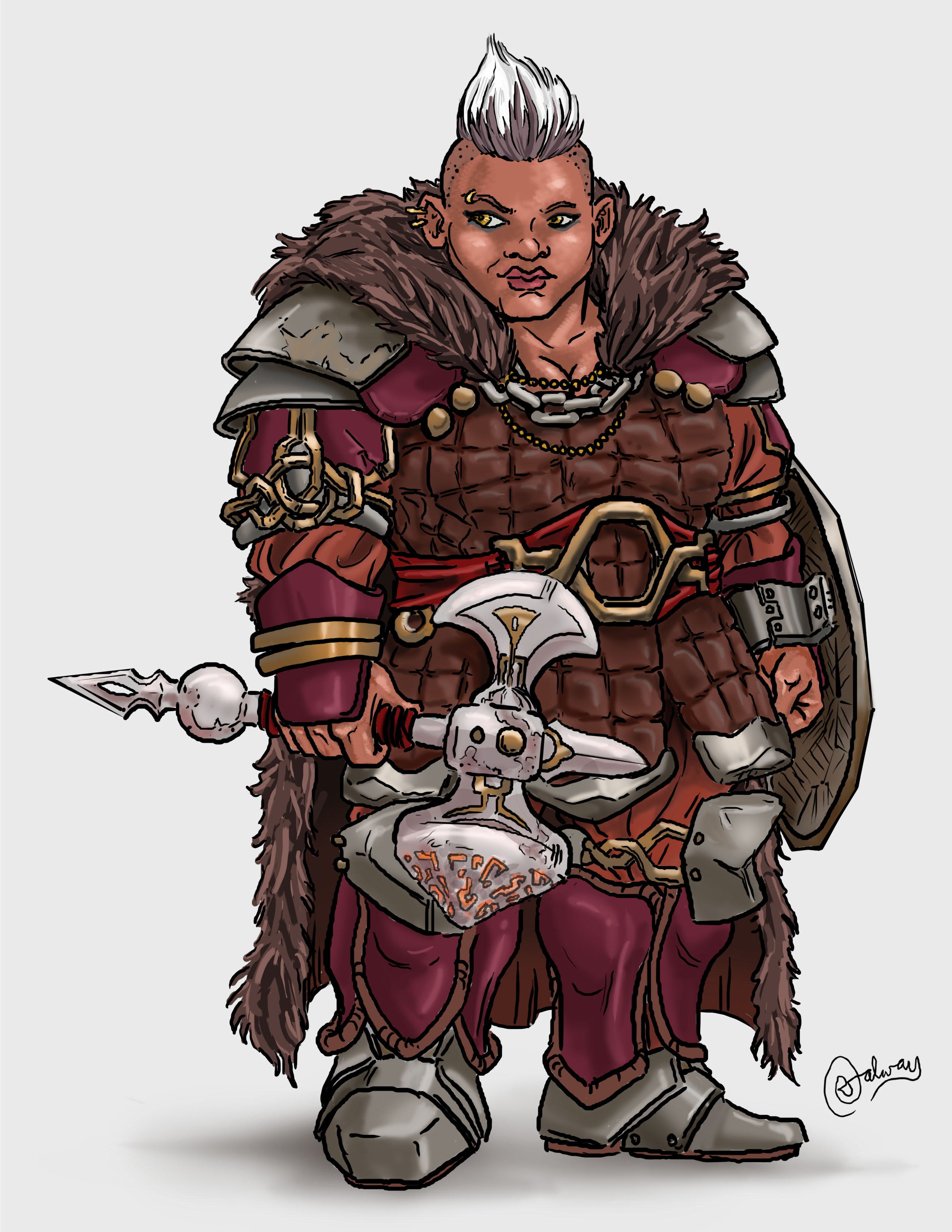
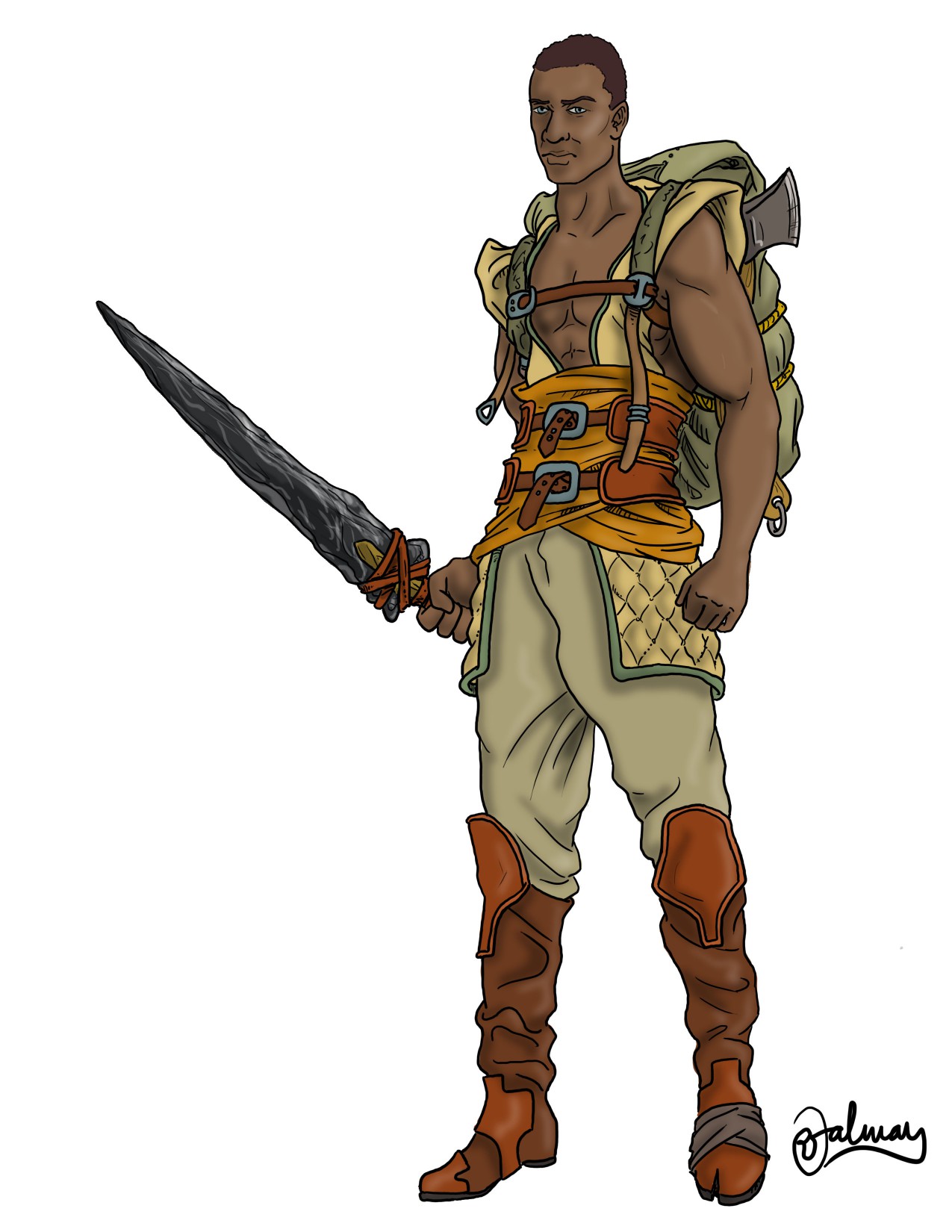
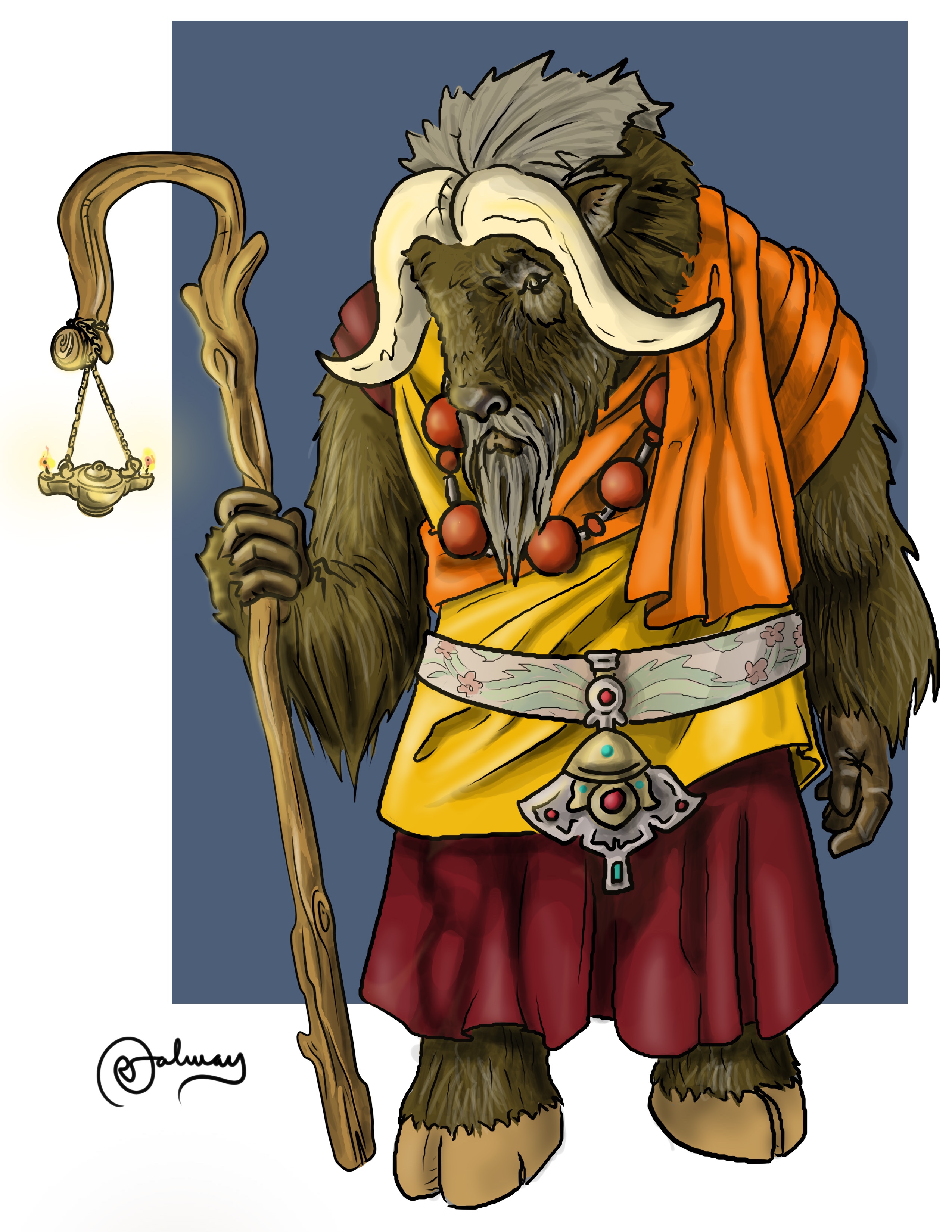
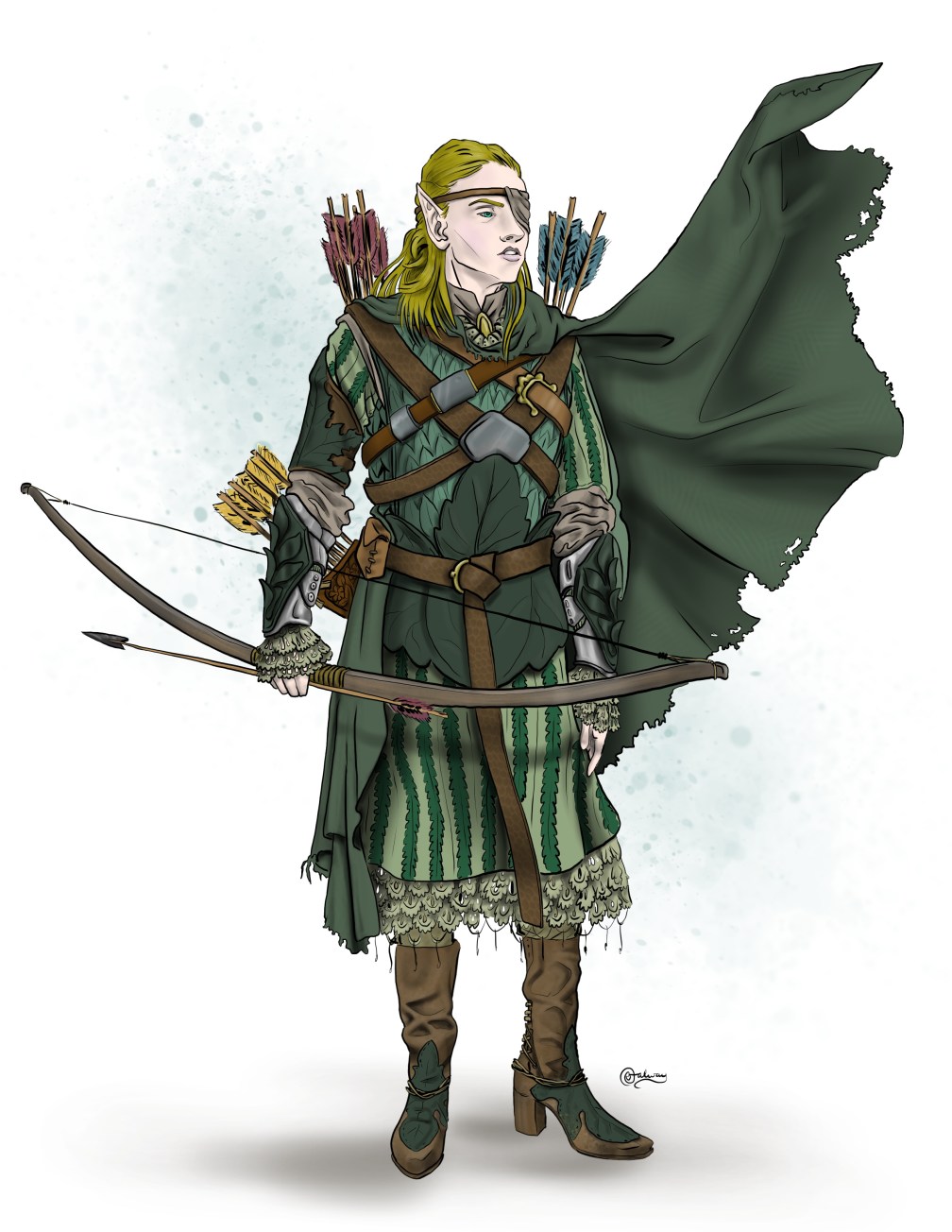


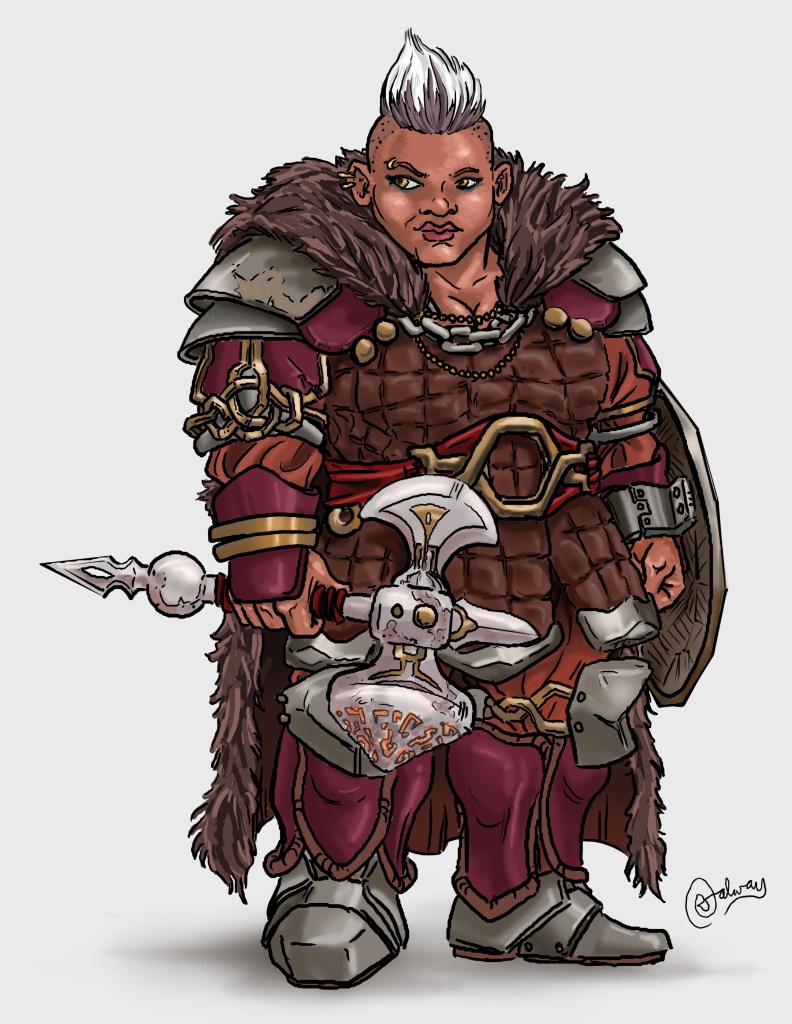
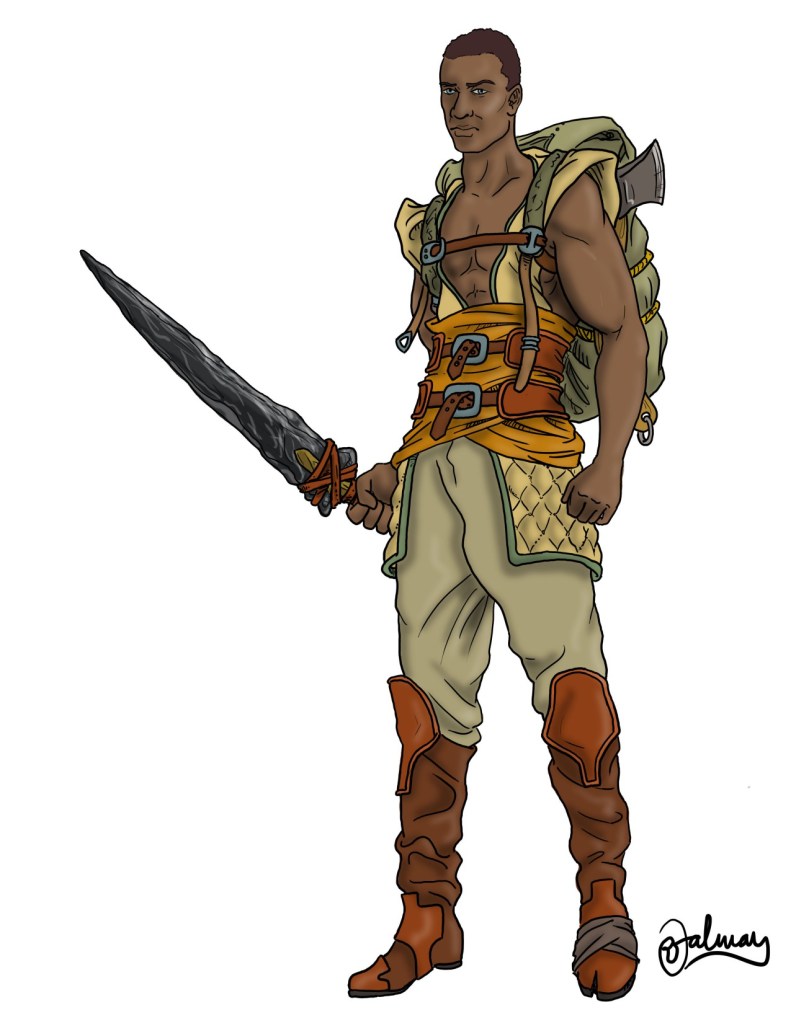
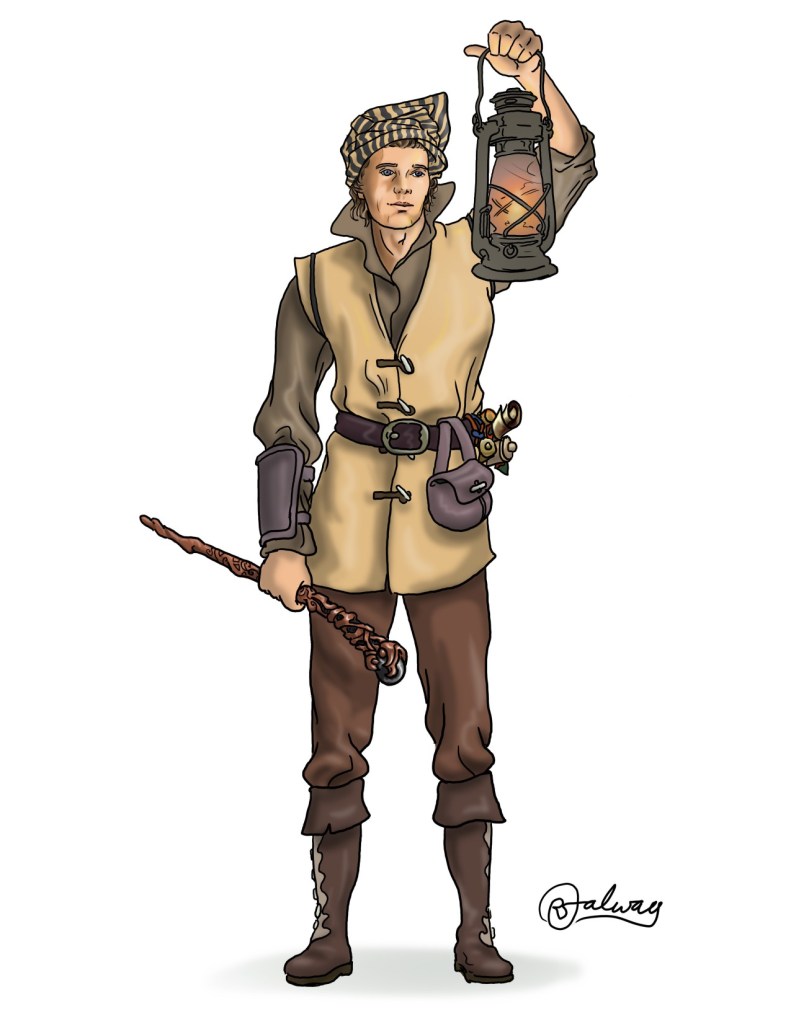
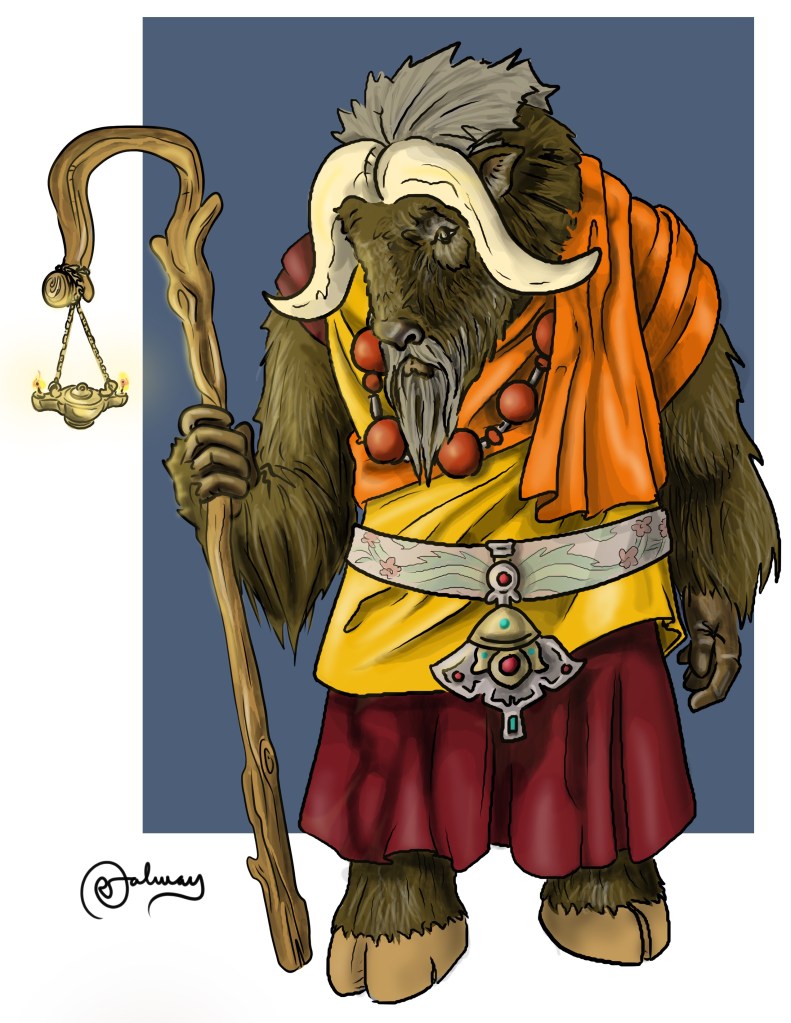

 Enemies of Creed