
Soul and Song – Chapter 12

Now for the final portion of my story. As you all know, the story of the Immortalium recounts in great detail how the elf wizard Caster challenged the First-father of the elves to a contest of magic. You also know that it was Caster’s victory in that contest that opened the way for the rest of the second generation of Immortals to overthrow the reign of the First-parents. But one mystery that the Immortalium never reveals is how Caster became powerful enough to defeat the elven First-father in the first place.

The answer to this mystery, as well as the answer to all of the Unanswerable Questions, is The Ancient One. It was The Ancient One, disguised as an old traveler, who gave Caster the magical stone that granted him the power to win that contest. For you see, The Ancient One saw in Caster great ingenuity and passion, and he was convinced that his hopes to have magic flourish on Reulla might still be realized if there were others like Caster who could cultivate it. Before leaving the magical stone with Caster, The Ancient One made the elf promise that he would never reveal to anyone where the power had come from.

This time, The Ancient One’s plan worked better than he had imagined. After Caster won the contest and took the status and immortality from his predecessor, he decreed that the power and position of every Immortal would be conditional upon victory in contests of their choosing against other members of their races. The other First-parents objected, of course, but none were powerful enough to directly oppose him, and they were loath to work together.

Challengers from among the races came to challenge their First-parents, and the struggle among mortals to improve and advance increased in order to obtain the status and power granted to the Immortals. Over time the First-parents were replaced and the ranks of the Immortals instead contained the most ambitious and impressive male and female of each race. This struggle for greatness lead to great conflict, but also great change and progress, which in turn caused the magic on Reulla to grow and thrive.

This time of great conflict and magical growth lasted for an age of this world, and The Ancient One was satisfied that it was finally safe to leave Reulla once again to travel the stars beyond. Before he did, he decided to visit Caster again and finally reveal his true identity to the elf. After first donning the same disguise as the first time he visited Caster, The Ancient One paid a visit to the new king of the Immortals.

Caster was surprised when the old man that had given him the stone so many centuries before suddenly appeared by his side. The Ancient One used the disguise to question Caster and ask him how he had used the magic so generously given to him. The Ancient One learned that Caster had kept his promise, and had never told anyone how he had obtained the magic necessary to defeat his predecessor. He had kept the secret even from the other Immortals.

The Ancient One then discarded his disguise and assumed his true form. He told Caster of who he was, and why he had given Caster a portion of his life magic. As The Ancient One spoke, Caster’s surprise turned to anger. For while Caster was clever and ambitious, he was also compassionate by nature, and it pained him to learn that he had been an essential part of the conflicts and upheaval that had come upon the world since his ascension. The Ancient One explained to Caster that conflict had been necessary for the magic of Reulla to take root and grow, but it did not comfort him.

Caster rebuked The Ancient One for dealing so harshly with the mortal races of the world, and bringing about such misery and pain. He told The Ancient One to return to his journey among the stars so that he might finally leave the world of Reulla in peace. The Ancient One reminded Caster that without him there never would have been any mortal races nor any life at all upon Reulla, but that he did regret that such suffering seemed to be necessary among his children.

Caster’s countenance softened and he believed the compassion The Ancient One claimed to have for the mortals. He made a vow with The Ancient One that if he would leave Reulla for an age under the care of Caster and his Immortals, when he returned someday he would find the world at peace as he had always wanted. Daring to believe Caster’s words, The Ancient One accepted the vow, and also gave the elf charge over the Celestial Guardians to help in his work.

And so The Ancient One finally left Reulla and returned to the stars to continue his journey of endless discovery. He visited more worlds and saw more wonders, and yet his thoughts often wandered back to Reulla and the mortals he had left in Caster’s care. It is possible that he would have returned to our world much sooner, but something extraordinary happened.

As The Ancient One traveled to new worlds beyond the reaches of any stars he had yet visited, he met another like him. She was amazing and infuriating and brilliant and different and beautiful. Since learning the secrets of life magic and gaining his immortality, The Ancient One had never found another that was his equal. She was. She was his equal and more.

She was also surprised to find another being with such power, and he intrigued her. They shared stories and experiences that only beings such as they could appreciate. They traveled together among the stars, learning more than either had ever learned alone. Over time, companionship grew into affection, which grew into love.

It was this love that caused The Ancient One to once again remember Reulla, for it was the only thing besides her that had ever meant so much to him. It was his masterpiece, and The Ancient One decided the he wanted to make it his wedding present and share it with his new companion forevermore. But before he could present such a gift to one so magnificent, he would need to return to ensure that Caster had kept his vow.

So The Ancient One returned to the world that owed all life and magic to him. And yet he returned not in glory and power, but in disguise once again. He wanted to see and determine for himself whether the peace that Caster had promised was upon his world. Over time he discovered that Caster had not broken his vow, but he had not kept it in the way that The Ancient One had wanted.

For he found that truly the tumult and violence that had been spread over the face of Reulla when he left was no longer present among the mortals he now visited. There were no armies, no warmongering kings, no ambitious mage-lords seeking ever-greater power. The major conflicts among the mortals had been resolved, but something was wrong. The magic of Reulla was fading and many of the magical creatures and races he had placed on the world were diminishing in numbers and power.

The Ancient One searched high and low for Caster and the other Immortals for an explanation, but he found none of them. Even his faithful Celestial Guardians were nowhere to be found. Eventually he found a message, magically concealed and preserved at the place where The Ancient One first created the Nishpari. The message had been left for him by the Celestial Guardians to explain their absence should he ever return.

The message informed The Ancient One that although Caster and the Immortals strove diligently for years to obtain and maintain peace among the mortals, over the centuries they learned that the mere presence of the Immortals and the power they represented would always begin more conflicts than they could resolve. Gradually at first, Caster had ordered the Immortals to become less and less involved with the affairs of mortals, leaving them to achieve their own peace. Over time the tactic proved effective, and after the last great war among mortals, Caster decreed that the Immortals should have no more dealings with mortals whatsoever, and they magically concealed their existence from all but each other. To defy Caster’s decree was to risk losing their place among the Immortals altogether.

And now we come to my part of the story. For after The Ancient One had learned these things, he began to hear whispers as he traveled Reulla of savage forces gathering and a coming tide of conflict and war that would engulf the whole world and ignite the magic of the world to such intensity as never felt even during the Age of the Immortals.

The Ancient One was wary of revealing himself and risk extinguishing the coming conflict completely, but he also wanted to prevent all-out war and bloodshed engulfing Reulla, causing suffering for his children and ruining his wedding present. He knew that he would need a someone to act and serve him as the tide of strife grew nearer, but he also decided that he was done with Immortals. He would seek out a servant who was worthy of a portion of his magic, and to whom he could guide quietly and prove his obedience gradually over time. One who could act as his representative not in world-shaking might, but in many small and subtle acts to bring about his designs. One who could also spread the name of The Ancient One among his children and all of Reulla in preparation for the arrival of his bride.

You have asked why I am here in this land, and what my purpose here is. I am here because The Ancient One has sent me here. For you see, I am the servant he chose.
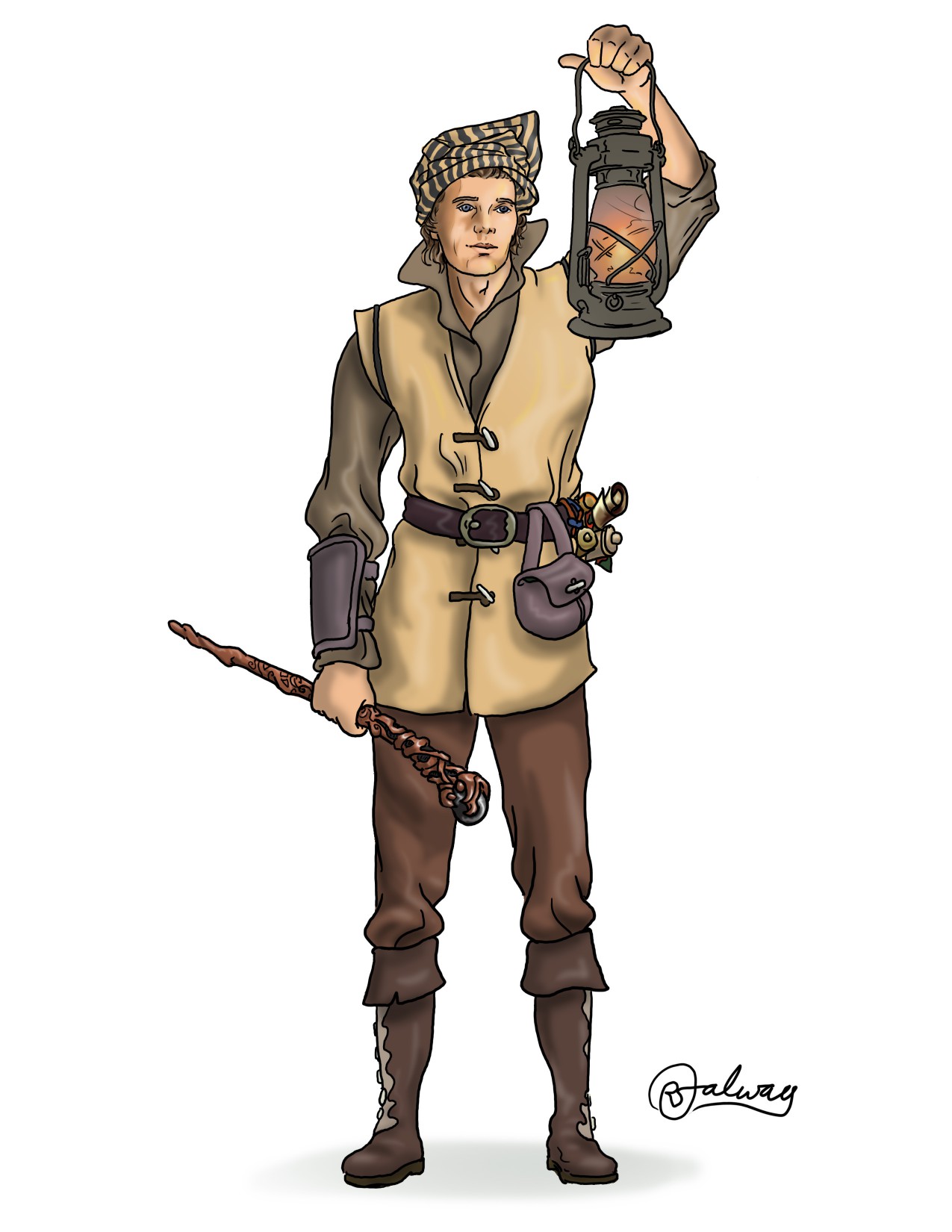
Seth Art by Ryan Salway Seth
Art by Ryan Salway

Soul and Song – Chapter 11

The First-parents multiplied and prospered, and with the threat of the Nishpari gone, the population of each race quickly grew. The civilizations of the races soon dotted the land on every major continent, but the races were deeply divided and refused to associate with one another. Instead of the cooperation and cross-breeding that The Ancient One had hoped for, the First-parents of each race had taught their posterities to avoid all races other than their own. Over time, isolation lead to distrust, which lead to animosity, which lead to aggression.

For you see, when The Ancient One created the First-parents he had gathered them all together to tell them all of the wonderful gifts he had given each race, and the traits he admired in each of them. But although he spoke his praises to all of them at once, each of them heard only the praises they wanted to hear.

The First-parents of humans listened to The Ancient One’s words as he said how he fashioned them after his own people, and had given them the gifts of curiosity and ingenuity. These gifts would help them to be leaders and innovators and ever push the boundaries of possibility. But the other First-parents ignored those words and did not hear them.

The First-parents of elves listened to The Ancient One’s words as he told them how their race had been inspired by a beautiful graceful people who lived in trees and loved nature. He told them that he had given them gifts of swift, agile bodies, sharp eyes and even sharper minds with long memories and long lives. But the other First-parents ignored those words and did not hear them.

The First-parents of dwarves listened to The Ancient One’s words as he told them how he had known a sturdy and stalwart people who used rock and ore to ensure that everything they built was sturdy and stalwart enough to withstand the weight of their enormous world. He told them that they had been given the gifts to be durable and steadfast, with resolute wills that did not waiver under pressure, just like the people he so admired who shared their name. But the other First-parents ignored those words and did not hear them.

The First-parents of orc listened to The Ancient One’s words as he told them of savage jungles and how he had tracked and hunted in the company of the people he had modeled them after. He told them that he had given them the great strength and cunning that those people had needed to compete on such a savage world, and had even given them the same beautiful green skin. But the other First-parents ignored those words and did not hear them.

The First-parents of goblins listened to The Ancient One’s words as he told them of a people so tenacious and enduring that they managed to prosper in some of the harshest environments on one of the most rugged worlds he had ever visited. He told them that the gifts he had given them of resilience, perseverance, and versatility would allow them to not only survive, but to adapt and thrive in any circumstances. But the other First-parents ignored those words and did not hear them.

So it was that the First-parents of each race believed that they and their children were superior to every other race, for their ears heard only the praises they wanted to hear. The First-parents taught their children how to use magic the way that The Ancient One had taught them, but instead of sharing the magic for the sake of protecting themselves, they did it so their races would maintain their supposed superiority over each other race. The use of this magic accentuated each race’s gifts, but also their differences.

Over time the animosity between the races became so great that any perceived offense was seen as a justification for the First-parents to command their children to seek violent retribution, and the battles between the races were constant. Since the First-parents were impervious to such conflicts, it was their children who suffered. It is likely that this cycle of violence and bloodshed would have continued indefinitely if not for the intervention of the Celestial Guardians.

The Celestial Guardians separated the five races to different parts of the land and set magical boundaries between them. After that they searched for The Ancient One and found him journeying through the land creating all manner of creatures, plants, and other forms of life that he was infusing with magic. They went to him and reported on the conflicts and bloodshed between the five races. The Ancient One was grieved to hear of the violence and he was frustrated that his work in cultivating magic had once again been interrupted, but he was also confused that such a thing could happen. He asked the Celestial Guardians what they saw with their golden eyes of truth.

The Celestial Guardians told The Ancient One that he was confused because he did not see his children the way they saw themselves, and they did not see themselves the way he saw them. For The Ancient One saw his children as many parts that made up one great whole and that each part depended on each other part, while his children saw themselves as only themselves and each other was seen as an other and an outsider. Instead of seeing that which made them similar, they saw only that which made them different.

The Ancient One wanted to help his children overcome their conflict, but he also wanted to continue his work of planting and nurturing more magic throughout the world. Then he thought of a plan that would allow him to accomplish both desires at the same time. He would continue to create life that was magical in nature, but instead of creating them in the forms of magical beasts and birds and other forms of life, he would create them as magical races. He would give them thought and reason like the other races he had already created, but they would be wildly different from one another and incapable of intermarrying and mating. In this way, The Ancient One hoped that the first five races would see more clearly the similarities among each other, and learn to embrace the beauty and variety of their new brethren.

The Ancient One set to work on this plan with a passion. Instead of drawing inspiration only from peoples he had actually encountered in his journeys, he drew ideas from the myths and folklore in stories he heard growing up, as well as the legends and stories of the other worlds and cultures he had visited. He magically combined the forms of humans and other races with the features and aspects of animals to create the satyrs, centaurs, harpies, merfolk, minotaurs, and others. He incorporated the aspects of vegetation to create the nymphs, mycoids, kapres, and nature spirits. He even created amalgamations of the elements themselves with races such as fiery ifrits, djinns of the air, and watery naiads. Some were created much larger than the first races, such as giants, trolls, cyclopes, and ogres. Others were created much smaller, such as brownies, gnomes, and leprechauns. Some were composed almost entirely of magic so they hardly resembled the first races at all, such as the faeries, which The Ancient One was particularly fond of.

For each of these new races, The Ancient One created another pair of First-parents to multiply and watch over their respective posterities. Into this endeavor, The Ancient One poured out his magic, his creative fervor, and his adoration. As each new race was introduced into the world, he hoped that his children would begin to see themselves as he saw them. But it was not to be.

Instead of seeing the endless variety and coming together, the First-parents saw the new races and divided further apart. The elves saw the nymphs, satyrs, and merfolk and said “These are beautiful and graceful. They will be our kin and be like us, and we will ban against the others.” The dwarves saw the cyclopes, golems, and minotaurs and said “These are sturdy and steadfast. They will be our kin and be like us, and we will ban against the others.” The orcs saw the trolls, ogres, and ifrits and said “These are strong and ferocious. They will be our kin and be like us, and we will ban against the others.” The goblins saw the harpies, mycoids, and djinns and said, “These are tenacious and persistent. They will be our kin and be like us, and we will ban against the others.” The humans saw the centaurs, gnomes, and fairies and said, “These are creative and inventive. They will be our kin and be like us, and we will ban against the others.”

And so the new races were divided against one another, and the divisions between races grew wider than ever. With a myriad of races and civilizations to watch over, it became difficult for the Celestial Guardians to maintain peace, and conflicts spread over the whole face of Reulla. The Ancient One looked over the world, hoping to find satisfaction with his creations, but instead saw only pride and pettiness and strife.

The Ancient One’s heart was heavy and his mind was weary. He had labored so long and so hard to shape Reulla and the life upon it to create a world that he could be proud to call home. He had poured out his magic, creativity, and love in abundance, and yet the behavior of his children yielded him nothing but shame and sadness.

With no more ideas of how to proceed, The Ancient One decided to leave Reulla and return to his journey among the stars again. He reasoned that perhaps if left to their own devices long enough, the different races of Reulla would learn to overcome their differences and petty conflicts. But as he prepared to leave for worlds beyond, he was visited by the Celestial Guardians with a warning, for they had seen with their golden eyes of truth the devastation that would occur if The Ancient One left Reulla.

Despite The Ancient One’s exhaustive efforts to cultivate magic on Reulla, the energies he had poured into his creations had failed to take root, magnify, and thrive as he had intended. All magic on the face of the world was still his own, and if he left, that magic would leave with him. The Celestial Guardians assured him that the magically dependant faeries would be the first to perish, and over time all of his later creations and races that relied upon magic to sustain their existence would eventually dwindle and cease to exist.

This news so unsettled The Ancient One that he personally went forth across all the face of Reulla to see for himself. Everywhere that he encountered magical races, creatures, vegetation, and all other manner of magical creations, he saw that every one of them was sustained by his own magic, just as his servants had said. Not even the smallest fireweed or moon mite could live for long if his magic was withdrawn from them.

The Ancient One asked the Celestial Guardians how this came to be, and they told him that it was because the magical energies he had given to his creations had only ever been consumed, rather than being nurtured, grown, and returned to the world by those who had received them. The chief example of this wasteful use of magic was the First-parents. They used magic to enhance themselves and equip their children for conflict, but they forbade their children from exploring, creating, or magnifying the portion of magic they had been given, lest one of their children should ever endeavor to become mightier than they. Upon penalty of death, all of the First-parents had outlawed the growing or changing of magic among their races. And magic will never endure in any environment where it is stagnant or contained.

The Celestial Guardians told The Ancient One that if he would see his magic take root upon Reulla, then he would first need to reclaim the magic and immortality that he had given the First-parents and utterly remove them and their oppressive rule from the face of the world. Though he saw the truth of their words, The Ancient One refused to believe that the only solution was to destroy his own children. He resolved that, as he had done with the Nishpari, he would find another solution that did not require him to kill his own beloved creations.

And now, my patient audience, we reach the portion of my tale that will sound both the most familiar to you, and yet perhaps the hardest to believe as well. For you see, the inspiration for The Ancient One’s plan finally came to him many years later when he observed a brilliant, ambitious, and impertinent young elf named Caster.